
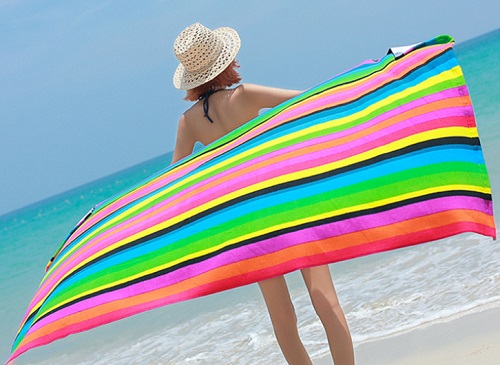
A private-label collection needs more than a logo on a towel. French retail buyers should define a repeatable product, a coherent design range and the information required for sale before approving production. This guide focuses on developing and replenishing your own range with a Chinese manufacturer, rather than buying assorted stock towels.
Build a Range Architecture Before Adding Designs
Start with the role of each article: a compact travel towel, a premium textured towel or a coordinated gift item. Select a manageable number of constructions and sizes before commissioning many patterns. A smaller, well-defined range is easier to sample, replenish and describe accurately than several similar products with unclear differences.
Create a line sheet containing an internal SKU, design version, finished size, target GSM, fibre composition, packaging and barcode reference for every article. Record what can change between seasons and what must remain consistent. Do not reuse an old SKU for a changed fabric without documenting the change for stock management and product information.
の microfiber beach towel product page is the starting point for material selection; this France guide addresses retail development and market preparation, not a separate manufacturer catalogue.
Use Fabric Samples to Set the Retail Positioning
Smooth microfiber suede can suit a portable travel range, while waffle provides texture and a more substantial feel. A higher GSM is not automatically proof of better performance. Compare samples for surface, print definition, absorbency under agreed conditions and the bulk of the final retail pack.
携帯電話では、水平にスワイプしてすべての列を読みます。
| Range role | Current reference | Decision before sampling |
|---|---|---|
| Portable travel collection | Suede, 200–350 gsm | Size, folded volume and print detail |
| Textured retail collection | Waffle, 360–450 gsm | Hand feel, texture and target pack |
| Thicker fine-loop collection | Micro terry, 360–450 gsm | Surface appearance and sample evaluation |
Ask the factory to confirm actual fibre percentages and GSM for the chosen article. A polyester surface and a polyester/polyamide blend are not interchangeable label descriptions. If recycled content is important to your range, request documentation for that exact material and supply chain; do not turn a broad supplier statement into a consumer-facing guarantee.
Develop an Approved Sample and a Reorder Record
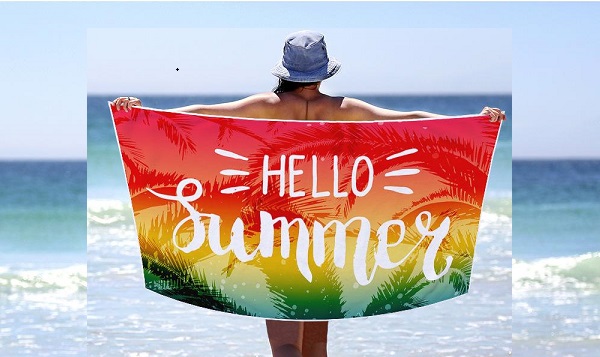
Full-colour digital printing needs a clear artwork version and an agreed fabric. Review colour, scale, edge treatment and reverse appearance on a physical sample. A photograph can be useful for layout discussion but does not establish colour accuracy, wash behaviour or hand feel.
Some suitable digital-print products start from 100 pieces per design. Confirm eligibility, design splits, custom labels and packaging minimums separately. Stock samples are free with buyer-paid freight; custom samples are charged according to size, printing and material. Custom sample fees can be credited against a bulk order only when its value exceeds US$5,000.
Keep the approved sample, specification, artwork and label files together. On a reorder, confirm whether fabric, inks, packaging or production conditions have changed. Set an acceptance procedure for a new batch rather than promising exact repeat colour from an old screen image. The custom solutions page explains the options to discuss during development.
Make the Retail Pack and Product Listing Agree
The towel, its sewn label, the retail pack and the online description should tell the same story. Decide who provides the French text and who signs it off. Separate mandatory composition information from care guidance, marketing language and certification claims, and check each against the actual article.
Review barcode readability, variant identification, pack dimensions and shelf presentation using a finished packed sample. Packaging options may include a paper band, bag, pouch or gift box; availability and price require confirmation. Avoid unnecessary mixed materials if they complicate your chosen packaging system, but do not call a pack recyclable or sustainable without a sound basis.
French-market requirements may extend beyond fibre labels. Check the EU textile labelling guidance and review the Refashion explanation of textile EPR responsibilities for the product and selling role. Retail brands and importers should verify declarations, applicable contributions and product classification rather than assuming the factory’s quote covers them.
Confirm current sorting-information requirements with the relevant scheme before printing Triman or Info-tri artwork. Textile and packaging obligations need separate review; do not assume one registration or symbol covers both. The EU packaging rules have phased application dates, so old label artwork should be checked for the planned launch date.
Agree on Inspection and Consumer-Product Documentation
Private label does not remove the need to identify legal responsibilities. Discuss the manufacturer, importer and EU responsible economic operator, risk assessment, technical documentation and traceability under the EU general product safety framework. Selling under your own brand can affect your role; ask your adviser to check the arrangement.
のために REACH restrictions, request a product-specific laboratory scope based on the fabric, colourants, finish and accessories. A material certificate or an old report does not prove every new article complies. Agree on laboratory testing and any independent inspection before production approval, including who books them and pays the charges.
- Confirm finished size, GSM and agreed tolerances.
- Compare print and sewing with the approved reference.
- Check French information, SKU and barcode against the line sheet.
- Verify carton quantities and assortment before shipment.
Plan Replenishment Around Sell-Through and Production
Do not treat an initial trial order and a replenishment order as the same purchasing problem. Keep quantities by design visible and decide how you will handle a slower-selling variant. Ask whether repeat fabric availability and packaging stock can be supported, without assuming stock is reserved indefinitely.
The confirmed digitally printed microfiber reference is 7–10 days for samples and 20–35 days for bulk production from order placement and receipt of deposit; shipping is separate. Get a route-specific freight quote and allow for inspection, clearance and delivery. Calculate landed cost with your customs representative; this guide does not prescribe a tariff code, duty rate or tax recovery outcome.
Favor Houseware Co., Ltd., based in Yiwu, can review your range brief, print, labels and packaging. See our manufacturing information and ask for documentation applicable to the selected product. A useful first enquiry includes the proposed line sheet, not only a request for the lowest unit price.
購入者の質問
Can one design be offered in several sizes?
Yes, this can be discussed, but confirm artwork scaling, quantity per size, packaging and applicable minimums in the quote.
Does private label mean all certificates cover our brand?
No. Review the document scope, named company, material or product coverage, validity and any logo-use conditions.
Can we reuse last season’s French packaging?
Check the current specification and applicable information requirements first, including any changed EPR or packaging provisions.
Developing a Private Label Towel Range for France?
Share your range plan, target fabric, size, quantity per design, French label requirements and intended retail pack. Favor Houseware can help you compare material and customisation options before confirming the order.
見積もりを依頼する