
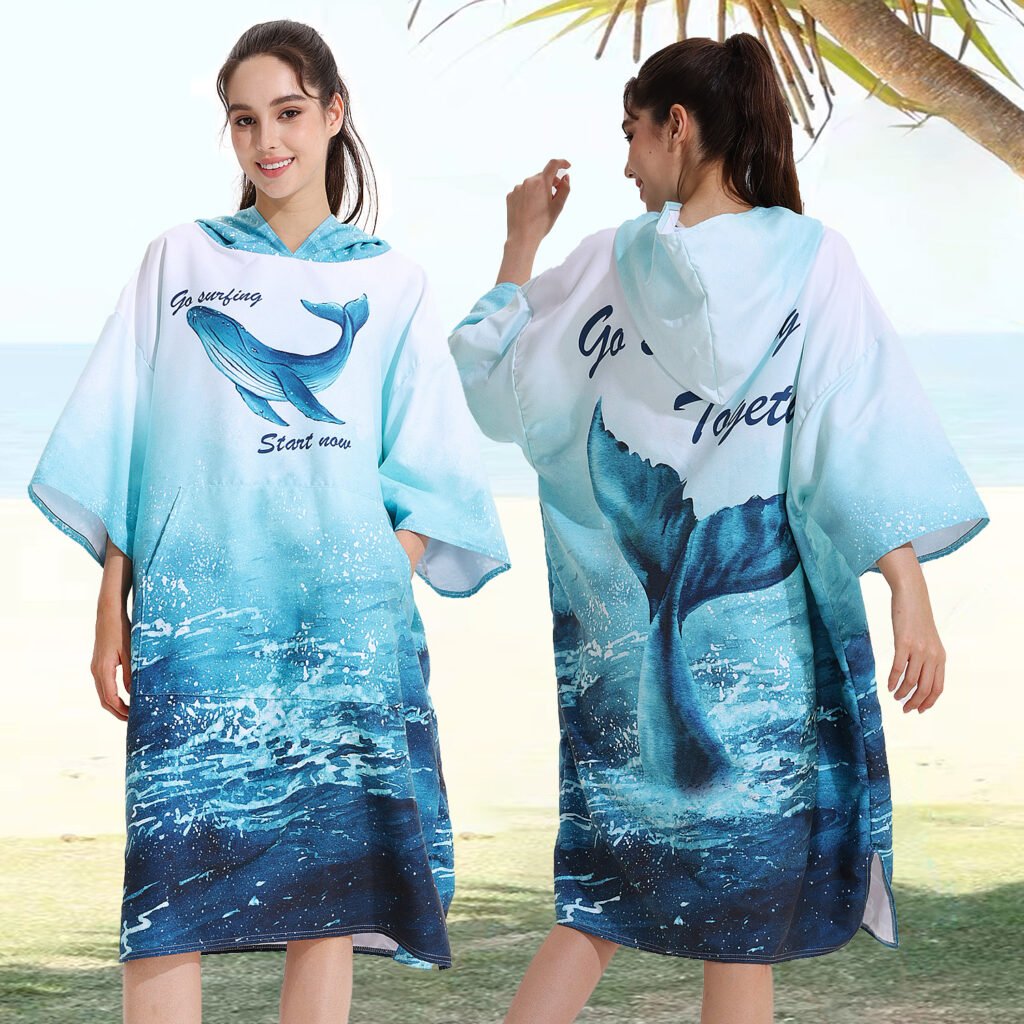
Resposta rápida: O que é um poncho de surf de inverno?
UM poncho de surf de inverno é um manto grosso com capuz projetado especificamente para surfistas de água fria. Ao contrário das toalhas de praia normais, possui tecidos isolados (300-400 GSM), laterais costuradas e materiais à prova de vento que mantêm você aquecido enquanto tira a roupa de neoprene. Portanto, protege você do vento frio e proporciona privacidade em condições rigorosas de inverno.
Poncho de surf de inverno vs manto de mudança de surf vs toalha de praia: comparação rápida
| Recurso | Poncho de surf de inverno | Manto de mudança padrão | Toalha de Praia Clássica |
|---|---|---|---|
| Cordialidade | Isolamento espesso, forro de lã | Calor médio | Calor mínimo |
| Proteção contra o vento | Concha à prova de vento/impermeável | Alguma proteção | Nenhum |
| Privacidade | Cobertura total com capuz | Boa cobertura | Limitado |
| Melhor para | Surf em águas frias (abaixo de 15°C) | Uso durante todo o ano | Dias de praia de verão |
| Peso | Pesado (400+ GSM) | Médio (250-350 GSM) | Leve (150-250 GSM) |
Crescimento do mercado de Surf Poncho: Por que a demanda está explodindo
Curiosamente, o mercado de ponchos de surf está a registar um rápido crescimento em todo o mundo. Além disso, uma marca europeia vendeu mais de 60.000 ponchos de surf só em 2024, expandindo sua linha de produtos para cerca de 60 modelos diferentes. Além disso, o mercado global de ponchos atingiu aproximadamente US$ 5,2 bilhões em 2025, com previsões mostrando um crescimento anual de 4,9% até 2033.
| Métrica | Ponto de dados |
|---|---|
| Ponchos de surf vendidos por uma marca da UE (2024) | Mais de 60.000 unidades |
| Número de modelos de ponchos de surf (mesma marca) | Cerca de 60 modelos |
| Valor de mercado global do poncho de chuva (2025) | US$ 5,2 bilhões |
| Mercado de poncho de chuva CAGR 2025-2033 | Crescimento anual de 4,9% |
| Volume anual de poncho (10 principais empresas) | Mais de 100 milhões de unidades por ano |
Além disso, a participação no surf continua a crescer globalmente. Na Austrália, o surf cresceu 24% anualmente durante a década de 2000, enquanto os EUA viram um Aumento de 28% entre 2019 e 2020. Consequentemente, mais surfistas permanecem na água o ano todo, inclusive durante os meses de inverno, o que impulsiona a demanda por serviços especializados equipamento de surf em água fria como toalhas quentes de poncho de surf.
O que é um poncho de surf de inverno? (Resposta rápida)
Simplificando, um poncho de surf de inverno é um roupão com capuz feito com tecidos mais grossos e isolantes em comparação com toalhas de praia normais. Normalmente, esses ponchos apresentam algodão 300-400 GSM, lã ou forros isolados que mantêm os surfistas aquecidos e cobertos durante a troca em condições de frio e vento.
Ao contrário de uma toalha plana, possui laterais costuradas, capuz e comprimento generoso. Portanto, você pode trocar a roupa de neoprene com total privacidade enquanto permanece protegido do vento frio e do ar frio. Além disso, muitos modelos de inverno incluem bolsos, zíperes e revestimentos externos à prova d'água para funcionalidade extra.
Ponto-chave: Os ponchos de surf de inverno são projetados especificamente para equipamento de surf em água fria necessidades, oferecendo calor, proteção contra o vento e privacidade que as toalhas normais simplesmente não podem oferecer.
Quão frio está “Surf em águas frias”? Compreendendo o desafio
Antes de mergulhar nos recursos do poncho, é importante entender o que “água fria” na verdade significa. De modo geral, o surf em águas frias refere-se a temperaturas da água abaixo de 15°C (59°F). No entanto, muitas regiões de surf no inverno registam temperaturas próximas dos 5-12°C (41-54°F) durante a época alta, especialmente no norte da Europa e em partes da América do Norte.
Guia de temperatura da água
- Água morna: 21°C+ (70°F+) – calções de banho ou fato de mola
- Água moderada: 15-21°C (59-70°F) – roupa de neoprene de 3/2 mm
- Água fria: 10-15°C (50-59°F) – roupa de neoprene de 4/3 mm a 5/4 mm
- Água muito fria: Abaixo de 10°C (50°F) – roupa de neoprene de 6/5mm mais botas, luvas, capuz
Fatos sobre perda de calor
Nessas temperaturas, a perda de calor ocorre rapidamente quando você sai da água. Na verdade, pesquisa sobre imersão em água fria mostra que a exposição ao frio reduz significativamente o desempenho físico. Além disso, seu corpo perde calor 25 vezes mais rápido na água fria do que no ar frio.
Por isso, os surfistas contam com roupas de neoprene grossas durante as sessões. Contudo, igualmente importante é o que acontece entre sessões - é aqui que uma qualidade toalha quente de poncho de surf torna-se essencial.
Por que o calor é importante para o desempenho
Curiosamente, um estudo científico do desporto de 2024 sobre surfistas mostrou que a temperatura corporal central e o desempenho são altamente afetados pelo frio. Além disso, a pesquisa descobriu que o aquecimento mais o aquecimento passivo melhoraram o desempenho das ondas iniciais em comparação com nenhum aquecimento.
“A água fria reduz significativamente o desempenho, enquanto o aquecimento e o calor passivo ajudam a manter a temperatura central e a manter o melhor desempenho dos surfistas.”
Conseqüentemente, manter-se aquecido antes e depois das sessões com ponchos grossos ajuda os surfistas a se manterem confortáveis, a se recuperarem mais rapidamente e, em última análise, a surfarem por mais tempo durante o inverno.
Poncho de surf de inverno vs manto de mudança de surf vs toalha de praia
Agora que entendemos o desafio da água fria, vamos explorar as diferenças entre essas três opções com mais detalhes.
Poncho de surf de inverno
Projetados especificamente para condições adversas, os ponchos de surf de inverno são geralmente mais grossos e às vezes à prova d'água. Além disso, eles são projetados para máxima proteção contra o vento e retenção de calor. A maioria dos modelos apresenta tecidos com alto GSM, capuzes profundos e comprimentos estendidos que fornecem cobertura dos ombros aos joelhos.
Poncho Trocador de Surf Padrão
Em contraste, os ponchos padrão para troca de surf usam algodão de peso médio ou materiais de microfibra. Embora sejam bons para mudanças em todas as estações, oferecem menos isolamento em verdadeiras condições de inverno. No entanto, eles funcionam bem para surfar na primavera, verão e outono em climas moderados.
Toalha de Praia Clássica
Finalmente, clássico toalhas de praia são planos, não têm laterais nem capô e são mais leves e baratos. No entanto, eles oferecem proteção mínima contra o vento e nenhuma privacidade para troca. Portanto, eles são mais adequados para os dias quentes de verão do que para o surf em águas frias.
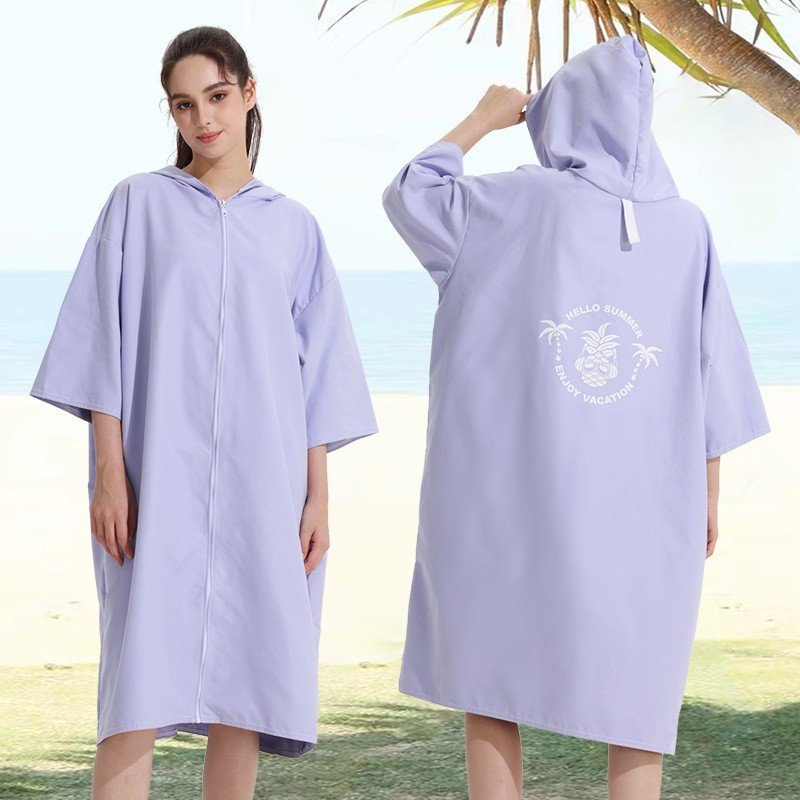
Poncho de surf de inverno com capuz profundo para máximo aquecimento
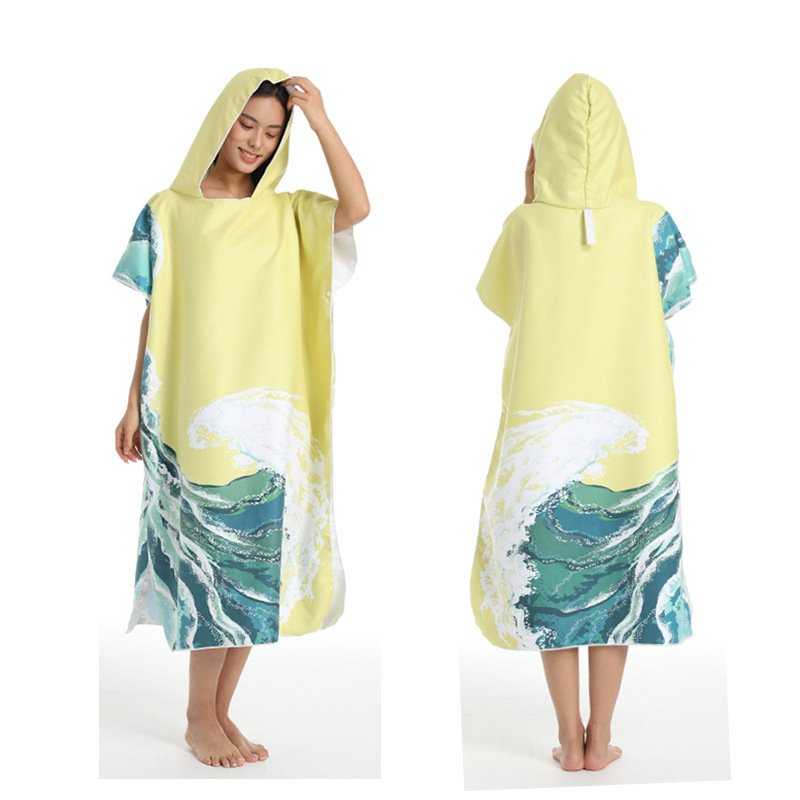
Toalha de poncho de surf quente perfeita para o calor pós-sessão
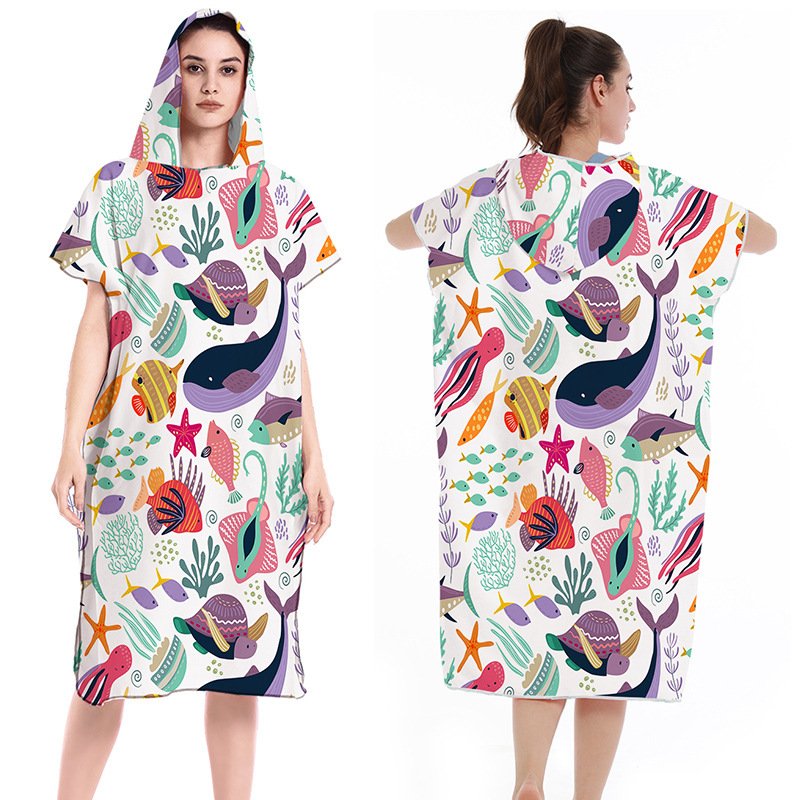
Robe para trocar de surf com bolsos frontais convenientes
Principais características de uma toalha quente de poncho de surf
Ao comprar um poncho de surf de inverno, vários recursos importantes determinam o quão aquecido e confortável você ficará. Vamos analisar cada elemento-chave.
Peso do tecido (GSM explicado de forma simples)
GSM significa “gramas por metro quadrado,” que mede a espessura e densidade do tecido. De modo geral, GSM mais alto significa material mais espesso, mais quente e mais absorvente. Para ponchos de surf de inverno, procure tecidos entre 350-450 G/M. Em comparação, as toalhas de praia normais variam normalmente entre 150-250 GSM.
Além disso, os modelos premium de inverno geralmente combinam tecido atoalhado de alto GSM com forro de lã para aquecimento extra. Por exemplo, opções de microfibra pode ter GSM ligeiramente inferior, mas compensar com tecnologia de secagem rápida.
Capuz e Cobertura
Um capuz profundo e bem desenhado é crucial para ponchos de surf de inverno. Como até 30% do calor do corpo escapa pela cabeça, um capuz de qualidade ajuda a reter o calor e a proteger o cabelo molhado do vento frio. Além disso, procure capuzes com cordões que permitem ajustar o ajuste ao redor do rosto durante condições particularmente ventosas.
Além disso, o comprimento é significativamente importante. A maioria dos ponchos de inverno se estende pelo menos até a altura dos joelhos, proporcionando cobertura total enquanto você se troca. Consequentemente, este comprimento generoso oferece calor e privacidade.
Bolsos e zíperes
Recursos práticos fazem uma grande diferença em condições de frio. Especificamente, procure:
- Bolsos canguru: Grandes bolsos frontais aquecem suas mãos e armazenam chaves do carro, telefone ou cera
- Zíperes bidirecionais: Permitir opções fáceis de ligar/desligar e ventilação
- Fendas laterais: Fornece aberturas de braço mais largas para facilitar a troca
- Bolsos forrados: Forro de lã extra mantém as mãos ainda mais quentes
Opções de forro
O forro interno determina o quão quente e confortável seu poncho fica em contato com sua pele. As opções de revestimento comuns incluem:
- Algodão turco: Macio, altamente absorvente, confortável diretamente na pele
- Velo: Máxima retenção de calor, confortável e macio
- Microfibra: Leve, de secagem rápida, compacto para viagens
- Camada dupla: Combina tecido interno absorvente com camada intermediária de lã isolante
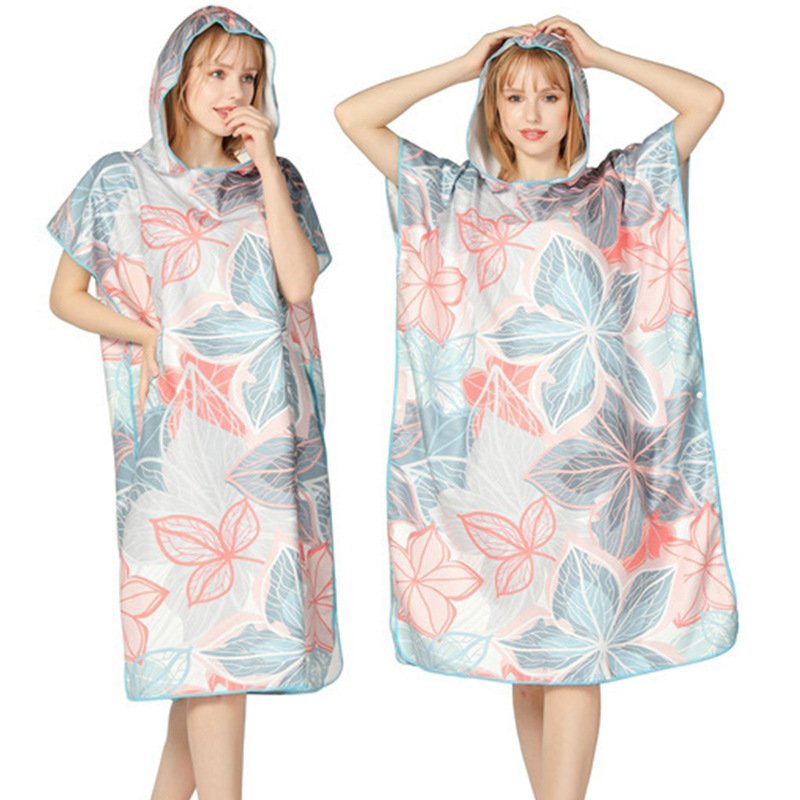
Toalha de poncho de surf personalizada com opções de logotipo da marca
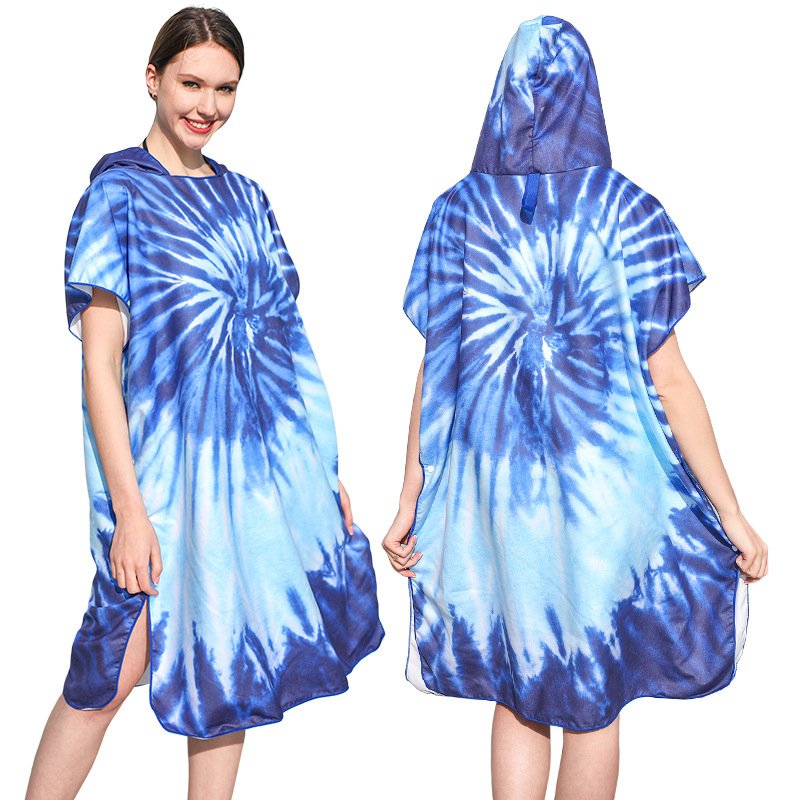
Equipamento essencial para surf em águas frias, incluindo poncho quente
Melhores materiais para ponchos de surf de inverno
Choosing the right material significantly impacts your comfort during cold-water sessions. Let’s examine the pros and cons of each popular fabric option.
Cotton Terry (Pros & Cons)
Prós:
- Extremely soft and comfortable against skin
- High absorbency pulls moisture away quickly
- Natural, breathable fabric feels less synthetic
- Durable and long-lasting with proper care
Contras:
- Heavier when fully wet
- Takes longer to dry compared to microfiber
- Bulkier for packing and travel
Overall, ponchos de algodão work best for surfers who prioritize comfort and warmth over portability.
Microfiber (Pros & Cons)
Prós:
- Lightweight and compact for travel
- Dries extremely fast (50-70% faster than cotton)
- Less prone to mildew and odors
- Often more affordable than premium cotton
Contras:
- Can feel less soft than high-quality cotton
- May retain odors over time without proper washing
- Less warm than thick cotton terry or fleece
Consequently, microfiber works well for shoulder seasons or surfers who travel frequently and need packable gear.
Fleece and Insulated Linings
Prós:
- Maximum warmth and comfort for true winter
- Feels cozy and plush against skin
- Often combined with woven outer shell for wind protection
- Excellent heat retention even in extreme cold
Contras:
- Heaviest and bulkiest option
- Takes longest to dry completely
- Higher price point than single-layer options
Therefore, fleece-lined ponchos are ideal for dedicated winter surfers in very cold regions.
Recycled and Eco-Friendly Fabrics
Increasingly, many brands are experimenting with recycled fibers to match sustainability trends in surf apparel. For instance, recycled polyester and cotton blends offer similar performance while reducing environmental impact. Moreover, eco-conscious surfers appreciate options that align with ocean conservation values.
No chinatowelmanufacturer.com, we offer sustainable fabric options for custom orders, including OEKO-TEX certified materials that meet strict environmental and safety standards.
Waterproof vs Non-Waterproof: Which Winter Poncho Is Better?
One important decision is whether to choose a waterproof or non-waterproof winter surf poncho. Each option has distinct advantages depending on your specific conditions.
Waterproof Outer Shell Ponchos
Waterproof models feature a woven outer shell that blocks wind and rain. This design helps significantly in stormy parking lots or very windy beach breaks. Additionally, the shell prevents water from soaking through to the insulated lining.
Best for:
- Rainy or stormy surf sessions
- Extremely windy coastal areas
- Northern climates with wet winter weather
- Surfers who walk long distances from car to beach
However, waterproof shells can feel hotter during use and typically take longer to dry completely. Furthermore, they’re usually heavier and more expensive than non-waterproof options.
Non-Waterproof, Fully Towel-Style Ponchos
In contrast, non-waterproof ponchos are made entirely from absorbent terry or fleece materials. These designs are more breathable and lighter, which makes them better for mild climates or less extreme conditions.
Best for:
- Dry, cold winter days
- Milder coastal climates
- Surfers who change quickly near their vehicle
- Those who prioritize breathability and comfort
Ultimately, consider your local climate and typical surf conditions when making this choice. Many serious winter surfers actually own both types for different weather scenarios.
Complete Cold-Water Surfing Gear Checklist
A winter surf poncho is just one piece of your equipamento de surf em água fria setup. Here’s a complete checklist to ensure you’re fully prepared for cold sessions:
In-Water Gear
- 4/3mm to 6/5mm wetsuit (thickness depends on your region)
- Neoprene boots (5mm-7mm for water below 12-14°C)
- Neoprene gloves (3mm-5mm depending on temperature)
- Neoprene hood (essential for water below 10°C)
- Wetsuit lubricant (reduces chafing on neck and wrists)
Before and After Session Gear
- Winter surf poncho or insulated changing robe (pre- and post-session warmth)
- Thermos with hot drink (tea, coffee, or hot chocolate)
- Warm beanie or wool hat
- Dry base layers (thermal underwear for after surfing)
- Thick socks and warm shoes
- Changing mat or toalha de praia sem areia (keeps feet clean and dry)
- Plastic bag or wet bag (for storing wet wetsuit)
Optional But Helpful Items
- Portable shower or water jug for rinsing
- Hot water bottle to place inside poncho
- Windproof changing tent or shelter
- Hand warmers or chemical heat packs
Dica profissional: Your warm surf poncho towel serves as the key transition item between water and land in this checklist. It’s often the single most important piece of post-session gear for maintaining body heat.
How Much Warmer Does a Surf Poncho Keep You?
Many surfers wonder about the actual warmth performance of winter surf ponchos. While specific temperature values vary by fabric and wind conditions, scientific research provides helpful insights.
As mentioned earlier, sports science data shows that warm-up and passive heating help maintain core temperature and improve early wave performance compared with no warm-up. Specifically, surfers who used warming gear between sessions maintained better body temperature and performed significantly better on their first waves.
Additionally, pesquisa sobre imersão em água fria demonstrates that insulating layers reduce heat loss substantially. Thick lined ponchos create a barrier against wind chill, which makes it easier for your body to recover its normal temperature after leaving cold water.
“In practical terms, a quality winter poncho can help you feel comfortable within 5-10 minutes after exiting cold water, compared to 20-30 minutes without one.”
Furthermore, the combination of absorbent inner layers and windproof outer shells stops the evaporative cooling effect that makes you feel freezing after surfing. Therefore, investing in a proper toalha quente de poncho de surf directly impacts how long and how often you can surf throughout winter.
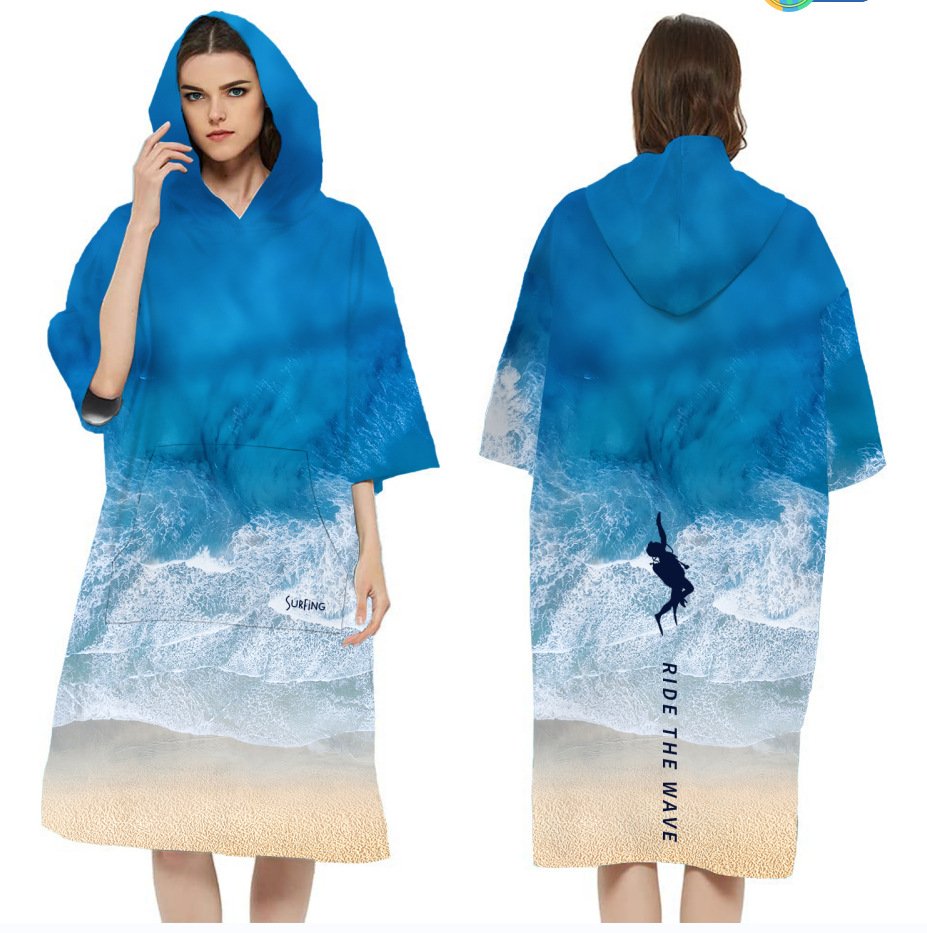
Winter surf poncho providing essential post-session warmth
Size and Fit Guide for Winter Surf Ponchos
Getting the right size ensures maximum comfort and functionality from your winter surf poncho. Let’s explore sizing options across different user groups.
Unisex vs Dedicated Sizing
Most winter ponchos use oversized, unisex designs that fit comfortably over thick wetsuits. This generous sizing allows surfers to pull the poncho over their head while still wearing their wetsuit, then change underneath in complete privacy.
Typically, adult sizes feature:
- One-size-fits-most: Usually fits adults 5’2″ to 6’4″ (160-195 cm)
- Comprimento: 80-100 cm from shoulder to hem (reaches mid-thigh to knee)
- Largura: 65-80 cm across shoulders for easy arm movement
However, some brands offer separate men’s and women’s cuts. Women’s models often feature slightly narrower shoulders and longer length for better coverage, while maintaining the roomy fit needed for changing.
Crianças’ Winter Ponchos
For young surfers, dedicated kids’ sizes ensure proper coverage without excess fabric. Generally, kids’ ponchos come in two size ranges:
- Small (ages 4-8): Length 60-70 cm
- Medium/Large (ages 8-14): Length 70-80 cm
As a result, families can outfit everyone with matching ponchos sized appropriately for each member. This is particularly popular with custom surf poncho towel orders for surf schools and family surf camps.
How to Measure
To ensure the best fit, measure from your shoulder point down to where you want coverage (typically mid-thigh or knee). Additionally, check the poncho’s width across the chest—you want at least 10-15 cm of extra room beyond your shoulder width for comfortable arm movement while changing.
Pro sizing tip: When in doubt, go larger rather than smaller. A slightly oversized poncho provides better coverage and makes changing easier, while a too-small poncho defeats the purpose.
Design Details That Actually Matter in Winter
Beyond basic features, several design details separate average winter surf ponchos from exceptional ones. Pay attention to these elements when shopping:
- Two-way zippers for easy on/off and ventilation: Allow you to unzip from bottom or top, making it easier to get in and out without removing the poncho entirely. Furthermore, you can partially unzip for temperature control.
- Side slits or wide arm openings for easier changing: Strategically placed openings let you move your arms freely while changing underneath, without exposing your body to cold wind.
- Lined pockets to warm hands and store accessories: Fleece-lined kangaroo pockets provide a warm spot for cold hands between sets, plus safe storage for car keys, phone, and surf wax.
- Deep hood with drawcord to reduce heat loss from the head: An adjustable hood that fits snugly around your face prevents warm air from escaping and blocks cold wind effectively.
- Reinforced seams and double-stitching: Ensures durability even with regular use in harsh beach conditions and frequent washing.
- Interior hanging loop: Makes it easy to hang your poncho to dry in your vehicle or at home.
- Contrasting color lining: Not just aesthetic—helps you quickly identify inside from outside when changing in a rush or low light.
- Extended back length: Some models feature extra length in the back for better coverage when bending over to remove wetsuit booties.
Important Note: These seemingly small details make a significant difference in real-world winter conditions. Therefore, compare these features carefully when choosing between different models.
Travel-Friendly Winter Ponchos for Vanlife and Road Trips
For surf travelers, vanlife enthusiasts, and road-trippers, portability becomes an important consideration. Fortunately, several winter poncho options balance warmth with travel-friendly features.
Packability Factors
Microfiber or mid-weight cotton ponchos pack considerably smaller than heavy fleece-lined models. Specifically, a microfiber poncho can compress to about 30-40% of its full size, while thick cotton terry maintains most of its volume even when folded.
Additionally, some brands include compression bags or stuff sacks with their ponchos, making them easier to pack in surf travel bags or vehicle storage.
Multi-Purpose Travel Benefits
Beyond changing, winter surf ponchos serve multiple purposes during surf trips:
- Blanket or sleeping bag liner: Extra warmth on cold nights in vans or tents
- Beach picnic blanket: Clean, dry surface for meals or relaxing
- Emergency rain cover: Protection during unexpected showers
- Pillow or cushion: Fold it up for comfortable seating or head support
- Privacy screen: Hang it to create a changing area in open spaces
Consequently, surf travel brands increasingly describe changing ponchos as lightweight, packable essentials that double as versatile camp gear. In fact, many surf travel packing guides now list changing ponchos as must-have items.
Best Options for Travelers
For maximum travel-friendliness while maintaining winter warmth, consider:
- Microfiber ponchos with fleece accent panels (warmth without full bulk)
- Medium-weight cotton (300 GSM) with windproof shell overlay
- Hybrid designs with removable fleece linings
- Round towel ponchos that serve dual purposes
How to Care for Your Winter Surf Poncho Towel
Proper care extends the life of your winter surf poncho and maintains its warmth and absorbency. Follow these washing and drying tips for best results.
Washing Tips
First and foremost, always rinse your poncho with fresh water after each use, especially after ocean sessions. Salt water can degrade fabrics over time and reduce absorbency. Simply rinse thoroughly in the shower or with a hose.
For machine washing:
- Use água fria ou morna (not hot) to prevent shrinkage and color fading
- Choose mild, liquid detergent rather than powder, which can leave residue
- Avoid fabric softeners that coat fibers and reduce water absorption
- Wash separately or with similar colors to prevent color bleeding
- Use gentle cycle to protect seams and stitching
- Don’t overload the machine—ponchos need room to agitate properly
Dicas de secagem
Drying method significantly affects longevity, especially for printed or embroidered custom ponchos:
- Line-dry in shade when possible to protect colors and logos from UV damage
- Hang on a thick rod or clothesline to prevent stretching
- Shake out before hanging to restore loft and softness
- If using a dryer, use low heat only and remove while slightly damp
- Avoid direct sunlight for extended periods which can fade darker colors
Storage and Longevity Advice
Between surf seasons, store your poncho properly to maintain quality:
- Ensure it’s completely dry before storing to prevent mildew
- Fold loosely rather than tight compression
- Store in a breathable bag, not sealed plastic
- Keep in a cool, dry place away from direct heat sources
Moreover, inspect seams and stitching periodically for any wear. Small repairs done early prevent bigger problems later. With proper care, a quality winter surf poncho should last 3-5 years of regular use.
Special Note: For custom branded ponchos used in surf schools or rental programs, following these care instructions ensures your investment maintains its professional appearance season after season.
Custom Winter Surf Poncho Towels for Surf Shops, Schools and Outdoor Brands
Increasingly, surf schools, surf shops, and outdoor brands add custom-logo ponchos and changing robes to their merchandise lines. This trend makes sense for several compelling reasons.
Why Brands Choose Custom Ponchos
Custom surf ponchos serve as high-margin, functional items that customers use every session. Unlike t-shirts that get worn occasionally, a quality poncho becomes an essential piece of gear that surfers reach for repeatedly throughout winter.
Furthermore, branded ponchos offer excellent marketing visibility. When students wear your surf school’s poncho at the beach, they become walking advertisements. Similarly, surf shop customers who purchase branded ponchos effectively promote your business every time they go surfing.
Opções de personalização
Modern manufacturing allows extensive personalization for toalhas de poncho de surf personalizadas:
- Logo placement: Front chest, back, hood, or pocket positions
- Printing methods: Screen printing, embroidery, sublimation, or heat transfer
- Color choices: Full custom color matching to brand guidelines
- Size ranges: Adult and kids’ sizes with same branding
- Fabric selection: Cotton, microfiber, fleece, or blended options
- Custom labels and tags: Interior woven labels with care instructions
- Unique design elements: Custom hood linings, contrast stitching, branded drawcords
Market Data Supporting Custom Ponchos
Remember the market data we shared earlier? One European brand sold over 60,000 surf ponchos in 2024, expanding to approximately 60 different models for various uses. This demonstrates strong market demand and the viability of custom poncho programs.
Additionally, with surfing participation growing 24% annually in Australia and 28% from 2019-2020 in the USA, the customer base for surf accessories continues expanding rapidly. Therefore, offering quality custom ponchos positions your brand to capitalize on this growth.
Ideal Customers for Custom Programs
- Surf schools: Branded gear for students plus rental income opportunities
- Surf shops: High-margin retail merchandise with repeat purchase potential
- Surf competitions and events: Participant gifts or sponsor branding
- Corporate team building programs: Branded gear for surf retreats
- Beach resorts and hotels: Luxury amenity items for guests
- Environmental organizations: Fundraising merchandise with eco-friendly fabrics
How to Choose a Reliable China Surf Poncho Manufacturer
When sourcing custom winter surf ponchos, selecting the right manufacturing partner determines your product quality, delivery reliability, and overall success. Here’s what to look for in a China surf poncho manufacturer.
Experience Producing Surf Ponchos for EU/US Markets
First, verify that the manufacturer has proven experience producing surf ponchos and changing robes specifically for European and US markets. These markets have high quality expectations and specific sizing preferences. Look for manufacturers who can show previous work samples and client references from Western brands.
Por exemplo, Favorecer Houseware Co., Ltd. has 15 years of experience manufacturing beach towels and surf changing ponchos for international markets, with an established track record serving global customers.
Stable GSM and Fabric Quality
Quality consistency matters tremendously for repeat orders. Your manufacturer should maintain stable GSM measurements, colorfastness, and tested shrinkage rates across production runs. Ask potential manufacturers about:
- Quality control processes for fabric inspection
- Testing procedures for colorfastness (ISO standards)
- Shrinkage testing protocols before cutting
- Yarn quality specifications and suppliers
Additionally, reputable manufacturers use high-quality yarn and imported weaving machines to ensure consistent fabric quality. At chinatowelmanufacturer.com, we implement strict quality inspection at every stage from raw materials to final packing.
Sustainable Fabrics and Recycled Content Options
Modern surf brands increasingly prioritize sustainability. Therefore, your manufacturer should offer options for:
- Recycled polyester and cotton blends
- OEKO-TEX certified fabrics (free from harmful chemicals)
- Organic cotton options
- Water-saving dyeing processes
- Reduced plastic packaging alternatives
OEKO-TEX® STANDARD 100 certification is available for all materials. GRS certification is available for microfiber materials. Ask us for documentation applicable to your material and order.
Custom Pattern, Embroidery, and Printing Capabilities
Your manufacturer should manage multiple customization methods professionally:
- Impressão digital: Ideally with a standard digital-print MOQ of 100 pieces per design; mixed designs are quoted at a higher price for maximum design flexibility
- Bordado: For premium, long-lasting logo application
- Sublimation: For full-color, all-over designs
- Serigrafia: Cost-effective for larger runs with solid colors
At Favor Houseware, we offer digital printing with a standard digital-print MOQ of 100 pieces per design; mixed designs are quoted at a higher price, which gives brands incredible flexibility to test designs or create limited-edition runs. Our automatic sewing machines ensure consistent stitching quality even on embroidered logos.
Clear Communication on Lead Time, Sampling, and Shipping
Professional manufacturers provide transparent information about:
- Sample development time: 15–20 days for poncho samples
- Production lead time: 30–35 days for poncho bulk production, depending on quantity, counted from order placement and receipt of the deposit
- Minimum order quantities: Look for flexible MOQs (100-500 pieces)
- Shipping options: Air freight for urgent orders, sea freight for cost savings
- Payment terms: Clear terms with secure payment options
Additionally, manufacturers should offer free stock samples (you pay only freight costs) so you can verify quality before placing large orders. This demonstrates confidence in their product quality.
Quality Certifications and Standards
Reputable manufacturers maintain important certifications:
- OEKO-TEX® STANDARD 100 certification is available for all materials. GRS certification is available for microfiber materials. Ask us for documentation applicable to your material and order.
- Padrão OEKO-TEX 100: Textiles tested for harmful substances
- OEKO-TEX® STANDARD 100 certification is available for all materials. GRS certification is available for microfiber materials. Ask us for documentation applicable to your material and order.
- OEKO-TEX® STANDARD 100 certification is available for all materials. GRS certification is available for microfiber materials. Ask us for documentation applicable to your material and order.
These certifications aren’t just paperwork—they represent genuine commitment to quality and safety. At chinatowelmanufacturer.com, we maintain all these certifications and can provide documentation upon request.
Factory Location and Logistics
Consider the manufacturer’s location relative to shipping ports and materials suppliers. For instance, Favor Houseware operates from Yiwu, Jinhua, Zhejiang Province, China—a region known for textile manufacturing with excellent logistics infrastructure. This location ensures:
- Access to quality fabric suppliers
- Proximity to major shipping ports (Shanghai, Ningbo)
- Competitive shipping rates
- Fast domestic material sourcing
Choosing the Right Partner
Ultimately, the best manufacturer combines quality products, reasonable pricing, flexible customization, and reliable communication. Before committing to large orders, request samples, ask detailed questions about processes, and verify certifications.
Ready to start your custom surf poncho project? Favor Houseware at chinatowelmanufacturer.com offers comprehensive customization, quality assurance, sustainable production, low MOQ (starting from 100 pieces), and excellent customer service backed by 15 years of international manufacturing experience. Contate-nos hoje for free stock samples and a detailed quote.
Winter Surf Poncho FAQ (People Also Ask)
Is a winter surf poncho worth it for cold-water surfing?
Absolutely yes. In cold and windy conditions, a thick surf poncho or insulated changing robe helps reduce heat loss significantly after leaving the water. Moreover, it lets surfers warm up faster and change out of wetsuits in comfort and complete privacy. Given that cold water reduces physical performance, maintaining warmth between sessions directly improves your overall surf experience.
What should I look for in a warm surf poncho towel?
Look for high-GSM terry or fleece lining (350-450 GSM) for optimal warmth, a windproof or waterproof outer shell to block cold wind, a deep hood with drawcord to protect your head, generous length for full coverage (reaching at least to knees), and practical features like pockets or zips that make changing easier in cold weather. Additionally, check the quality of stitching and seams for durability.
What is the difference between a surf changing robe and a normal towel?
UM surf changing robe has sewn sides, arm openings, and a hood so you can change clothes discreetly while staying protected from wind and rain. In contrast, a normal towel is flat and offers little privacy or wind protection. Furthermore, changing robes are designed specifically for standing and moving while changing, whereas flat towels require you to wrap and hold them, which is difficult in windy conditions.
Can I use a winter surf poncho instead of a jacket?
For short periods around the car park, campsite, or beach, many surfers wear their insulated poncho like a coat because it provides excellent warmth and covers wet gear. However, it’s not designed to fully replace a technical winter jacket in heavy rain, snow, or for extended outdoor activities. Think of it as specialized gear for the transition period immediately before and after surfing.
What size winter surf poncho do I need?
Most ponchos use oversized, one-size-fits-most designs for adults, typically fitting people from 5’2″ to 6’4″ (160-195 cm) comfortably. They’re designed to fit over wetsuits with room to move. Check that the length reaches at least your knees for full coverage while changing. When in doubt, choose the larger size—slightly oversized is better than too tight for this type of gear.
What is the best material for a winter surf poncho?
For true winter conditions, thick cotton terry or fleece lining combined with a windproof or waterproof shell offers the best balance of warmth, absorbency, and wind protection. However, microfiber is lighter and better for travel or milder climates. The “melhor” material ultimately depends on your specific climate, travel needs, and personal preferences regarding weight versus warmth.
How do you wash and dry a surf poncho towel?
Rinse with fresh water after each use, then machine wash on gentle cycle with mild liquid detergent in cold or warm water. Importantly, avoid heavy fabric softeners that reduce absorbency. Line-dry in the shade when possible to protect colors and printed logos, or tumble dry on low heat only. Never use hot water or high heat, as these can cause shrinkage and damage printed designs.
Can I customize surf ponchos with my surf shop or school logo?
Yes, definitely! Many manufacturers offer custom surf ponchos with printed or embroidered logos, custom colors, and personalized label designs. This makes them popular merchandise items and rental equipment for surf schools and outdoor brands. Look for manufacturers that offer flexible MOQs and multiple customization methods (printing, embroidery, sublimation) to match your specific branding needs.
What other gear do I need for cold-water surfing?
Alongside a winter surf poncho, you should have a suitable thick wetsuit (4/3mm to 6/5mm depending on water temperature), neoprene boots for insulation and reef protection, neoprene gloves and hood for water below 12-14°C, and warm clothes for after your session. Additionally, bring a thermos with a hot drink, dry base layers, and a changing mat to protect against the performance-reducing effects of cold exposure.
Are winter surf ponchos only for surfers?
No, not at all! Changing ponchos are also widely used by open-water swimmers, triathletes, SUP (stand-up paddleboard) riders, kayakers, and campers. Basically, anyone who needs to change clothes outdoors while staying warm and covered benefits from this versatile gear. In fact, many outdoor enthusiasts keep one in their vehicle year-round for unexpected situations requiring quick clothing changes.
Conclusion: Stay Warm and Surf Longer This Winter
Winter surfing offers uncrowded waves, pristine conditions, and some of the best swells of the year. However, staying comfortable in cold conditions requires the right gear—and a quality poncho de surf de inverno sits at the heart of your cold-water setup.
As we’ve explored throughout this guide, the best toalhas quentes de poncho de surf combine high-GSM fabrics, thoughtful design features, and durable construction to keep you warm between sessions. Whether you choose cotton terry for maximum comfort, microfiber for travel-friendly performance, or fleece-lined models for extreme cold, investing in proper equipamento de surf em água fria directly impacts how often and how long you can surf throughout winter.
Furthermore, the growing surf poncho market—with brands selling 60,000+ units annually and the wider poncho market valued at $5.2 billion—demonstrates that surfers worldwide recognize the value of quality changing gear. As surfing participation continues growing at 20-28% annually, more people are discovering that the right equipment makes winter sessions not just bearable, but genuinely enjoyable.
For surf shops, schools, and outdoor brands, toalhas de poncho de surf personalizadas represent an excellent opportunity to offer functional, high-margin merchandise that customers actually use and value. With flexible manufacturing options, low minimum order quantities, and extensive customization capabilities, creating your own branded poncho line has never been more accessible.
Ready to Upgrade Your Winter Surf Game?
Whether you’re shopping for your first winter poncho or sourcing custom products for your business, choosing a reliable manufacturer makes all the difference. Favorecer Houseware Co., Ltd. no chinatowelmanufacturer.com brings 15 years of textile manufacturing excellence to every surf poncho we produce.
Why choose us for your winter surf ponchos?
- ✅ Comprehensive customization with a standard digital-print MOQ of 100 pieces per design; mixed designs are quoted at a higher price
- ✅ Premium materials including OEKO-TEX certified sustainable fabrics
- ✅ Quality certifications (OEKO-TEX STANDARD 100 for all materials; GRS for microfiber materials)
- ✅ Low minimum orders a partir de apenas 100 peças
- ✅ Fast turnaround with available stock for quick shipping
- ✅ Free stock samples available (pay freight only)
- ✅ 15 years experience serving international surf and beach brands
- ✅ Factory-direct pricing from our facility in Yiwu, Zhejiang Province
Get Your Custom Winter Surf Ponchos Today!
Whether you need one poncho for yourself or 10,000 for your brand, we’re ready to help. Contact Favor Houseware for free stock samples, detailed quotes, and expert guidance on creating the perfect winter surf poncho for your needs.
📧 Contact us today: chinatowelmanufacturer.com
📞 Get a quote within 24 hours
🌊 Join hundreds of satisfied brands worldwide who trust Favor Houseware for quality surf gear
Don’t let cold water keep you out of the ocean this winter. With the right surf changing robe or winter poncho, you’ll stay warm, comfortable, and ready for every session—no matter how low the temperature drops. Start your winter surf journey properly equipped, and discover why thousands of surfers worldwide consider a quality poncho their most essential piece of cold-water gear.
Stay warm, surf more, and make this your best winter surf season yet!
“`