
Quick Answer: What is a Sand-Resistant Beach Towel?
A sand-resistant beach towel uses smooth, tightly woven microfiber or mesh fabric that prevents sand from sticking. Unlike traditional cotton towels with loops that trap sand, these towels let sand fall off easily with a simple shake. Moreover, they dry up to 3× faster than cotton, which keeps them cleaner and more hygienic during beach trips.
Sand-Resistant vs Traditional Beach Towels: At-a-Glance Comparison
| Towel Type | Material | Drying Time | Sand Release | Weight (160×80cm) | Best For |
|---|---|---|---|---|---|
| Microfiber Sand-Free | 80-100% Polyester/Polyamide | 30-60 minutes | Excellent | 200-350g | Travel, backpacking |
| Mesh Sand-Proof | Polyester/Nylon Blend | 30-45 minutes | Excellent | 180-280g | Active beach sports |
| Cotton Terry | 100% Cotton | 90-180 minutes | Poor | 500-800g | Poolside, home use |
| Favor Houseware OEM | Custom Microfiber/Recycled Options | 30-60 minutes | Excellent | 200-400g (customizable) | Resorts, brands, bulk orders |
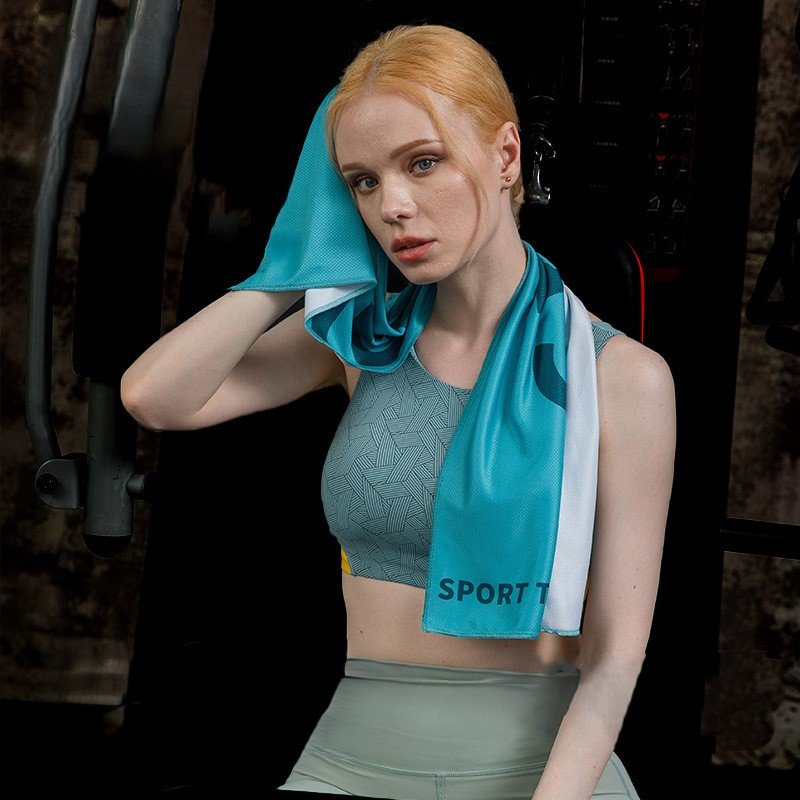
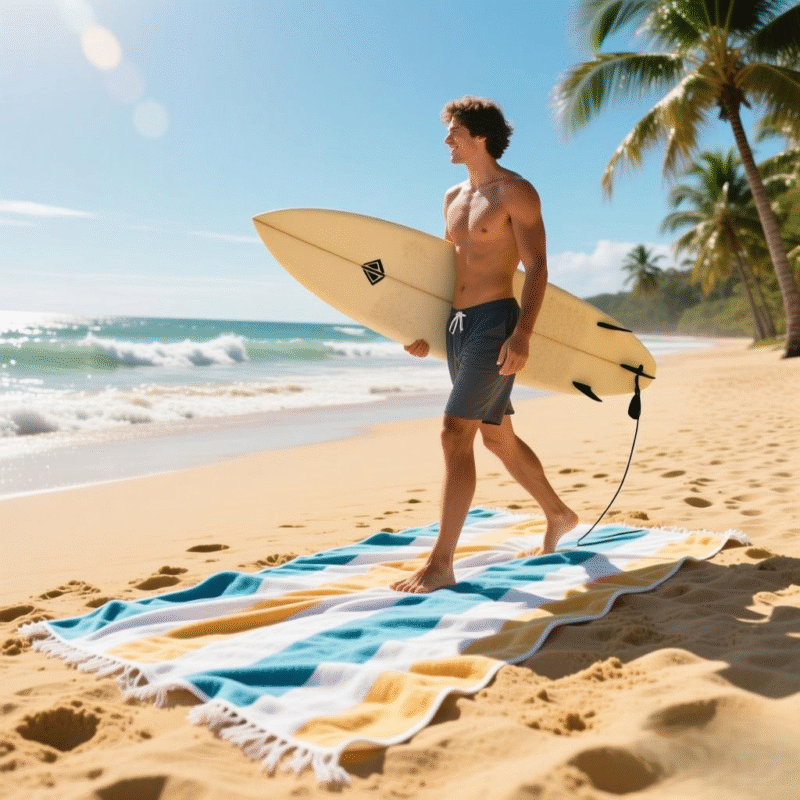
What Makes a Beach Towel Truly Sand-Resistant?
A sand resistant beach towel works like magic, but the science behind it is actually quite simple. Instead of using fluffy loops like regular towels, these towels have a smooth, tight surface that gives sand almost nowhere to grab onto. Think of it like this: sand sticks to a fuzzy sweater easily, but it slides right off a rain jacket. That’s exactly how sand-free towels work.
The secret lies in the fabric construction. Most sand proof beach towels use ultra-fine fibers woven together very tightly. As a result, when sand lands on the surface, it simply bounces off or falls away with a gentle shake. Furthermore, because these towels don’t have deep loops or pockets, sand can’t nestle in and hide like it does in traditional cotton terry towels.
Another important factor is how the towel handles moisture. When a towel stays wet for a long time, sand sticks to it much more stubbornly. However, quick dry sand free towels dry incredibly fast—sometimes in less than an hour in the sun. Therefore, the sand never gets a chance to cement itself into the fabric, which keeps your towel cleaner throughout your entire beach day.
Sand-Free vs Traditional Cotton Beach Towels: Key Differences
Understanding the difference between sand-resistant towels and traditional cotton towels will help you choose the right one for your needs. Here are the main ways they compare:
- Surface texture: Cotton terry towels have thousands of tiny loops that trap sand particles, while sand-free towels have smooth surfaces that let sand slide off easily.
- Drying speed: Microfiber sand resistant beach towels can dry up to three times faster than cotton towels of similar thickness, which means less time feeling damp and uncomfortable.
- Weight and portability: A standard cotton beach towel can weigh 500-800 grams when dry, but a microfiber alternative typically weighs only 200-350 grams, making it perfect for travel.
- Maintenance: Cotton towels often need special care to stay soft, whereas sand-free towels maintain their performance with simple washing and don’t require fabric softener.
- Sand retention: Independent tests show that cotton terry towels can retain 5-10 times more sand than properly designed no sand beach towels after the same beach use.
That being said, cotton towels aren’t bad—they’re just designed for different purposes. Cotton feels incredibly soft and luxurious, which is why hotels and pools often prefer them. Meanwhile, sand-free towels prioritize performance and convenience, especially for active beach-goers and travelers.
Best Materials for Sand-Proof Beach Towels
Choosing the right material is the most important decision when shopping for a sand resistant beach towel. Different fabrics offer different benefits, so let’s explore each option in detail.
Microfiber (Polyester/Polyamide)
Microfiber is the champion material for sand proof beach towels, and for good reason. This fabric is made from extremely fine synthetic fibers—often thinner than a single strand of silk. Because of this ultra-fine construction, microfiber creates a smooth, dense surface that sand simply cannot penetrate.
Additionally, microfiber towels are incredibly absorbent despite being thin and lightweight. The tiny fibers create millions of microscopic spaces that pull water away from your skin quickly. In fact, many quality microfiber towels can absorb up to seven times their weight in water, which makes them just as effective as cotton for drying off.
Moreover, microfiber dries at lightning speed. When you hang your towel in the sun or even in light shade, it typically dries in 30-60 minutes. This quick-dry feature means less odor, less bacteria growth, and—most importantly—sand falls off much more easily when the towel is dry.
“Microfiber technology has revolutionized beach towels. The combination of sand resistance, quick drying, and lightweight portability makes microfiber the top choice for over 70% of our resort and hotel clients.” — Favor Houseware Quality Control Team
Polyester & Nylon Blends
Many quick dry sand free towels use polyester and nylon blended together to create an even more durable fabric. Polyester provides the softness and color retention, while nylon adds extra strength and elasticity. This combination works especially well for active beach users who need towels that can handle rough sand, saltwater, and frequent washing.
Some innovative designs even use a mesh or “waffle weave” construction with polyester-nylon blends. These towels have a unique two-layer system where sand literally falls through the top layer instead of sitting on the surface. Consequently, you can shake out the towel and watch sand pour through like a sieve—it’s almost like the towel is self-cleaning.
Furthermore, polyester-nylon blends resist fading from sun exposure better than many other materials. If you’ve ever noticed how old beach towels look washed out and dull, you’ll appreciate how these synthetic blends maintain their vibrant colors season after season.
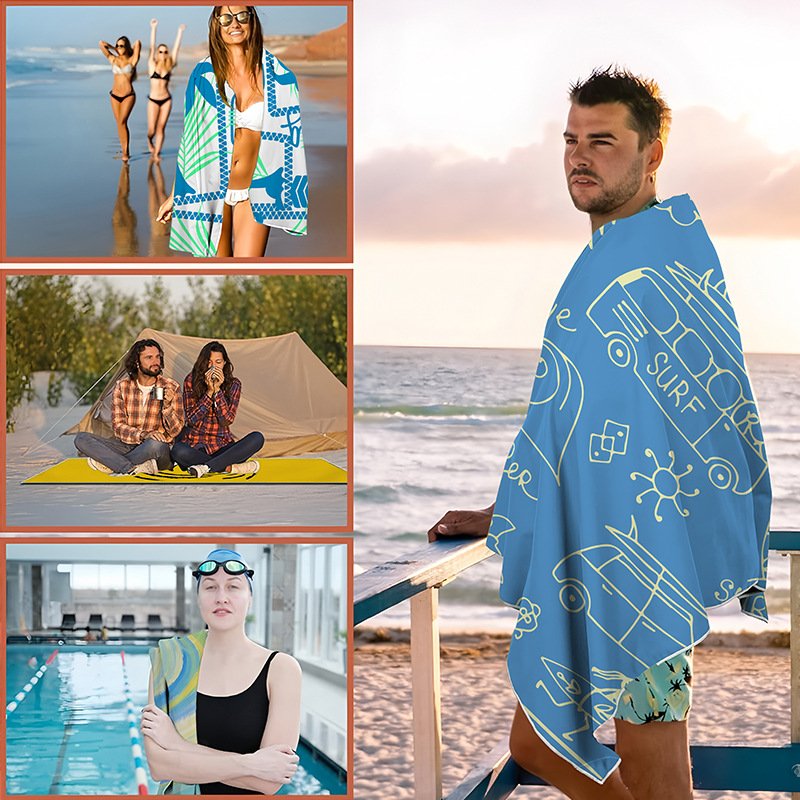
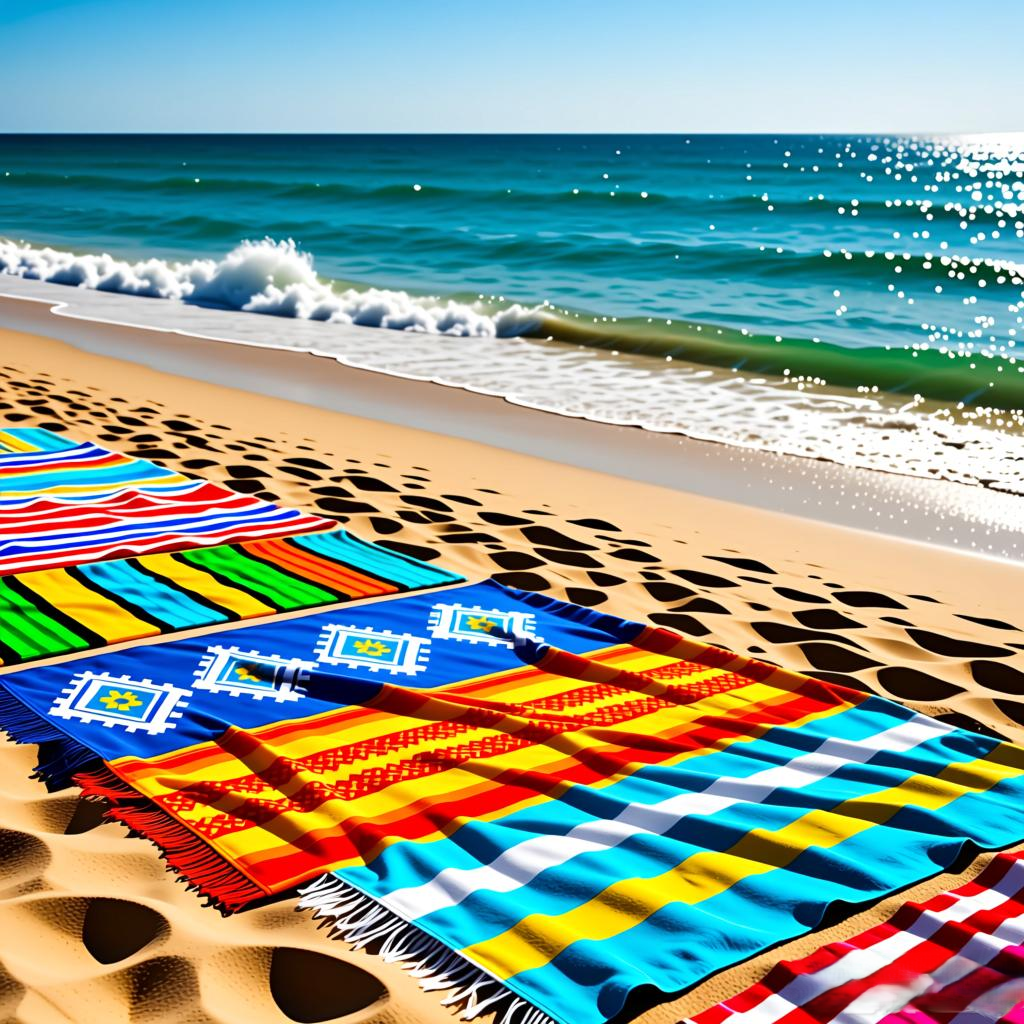
Why Cotton Terry Traps Sand
Traditional cotton terry towels are beloved for their softness and luxury feel, but they’re not ideal for sandy beaches. The problem lies in their construction: cotton terry fabric has thousands of tiny loops sticking up from the base fabric. These loops are fantastic for absorbing water, but they also create perfect little pockets where sand particles get trapped.
When the towel is wet, the situation gets even worse. Wet cotton loops clump together with sand particles stuck between them, creating what feels like a gritty, uncomfortable mess. Even after vigorous shaking, much of the sand remains embedded in the fabric.
However, cotton isn’t a bad choice for all situations. If you’re lounging by a pool with no sand in sight, or if you’re using your towel at home after a shower, cotton’s superior softness and absorbency make it the better option. The key is understanding that different materials serve different purposes. For beach environments, specialized sand-resistant materials simply perform better.
How Quick-Dry Fabric Improves Sand Resistance and Hygiene
The connection between drying speed and sand resistance might not seem obvious at first, but it’s actually crucial. When a sand resistant beach towel dries quickly, it provides multiple benefits that work together to keep you more comfortable.
First, sand adheres much more strongly to wet surfaces than to dry ones. Think about building sandcastles—you always need wet sand because dry sand won’t stick together. The same principle applies to your towel. Therefore, a towel that dries in 30-60 minutes instead of 2-3 hours spends much less time in that vulnerable “wet and sticky” state.
Second, quick-drying fabrics dramatically reduce bacteria and mold growth. According to research from the National Institutes of Health, damp towels can develop significant bacterial populations within just a few hours. Quick-dry towels minimize this issue by removing moisture rapidly, which keeps them fresher and more hygienic.
Additionally, faster drying means you can use the same towel multiple times during a beach day. You might swim in the morning, dry off, and then by afternoon your towel is completely dry and ready to use again. This convenience is especially valuable for families with children who go in and out of the water constantly.
Ideal GSM, Size, and Weight for Sand-Resistant Beach Towels
Understanding towel specifications helps you make a smarter purchase. Let’s break down what those numbers and measurements really mean for your beach experience.
What GSM Means and Why It Matters
GSM stands for “grams per square meter,” and it measures how dense and heavy a fabric is. In simple terms, higher GSM means a thicker, heavier towel, while lower GSM means a lighter, thinner one. For sand resistant beach towels, the sweet spot is usually between 200-350 GSM.
Here’s why that range works so well:
- Below 200 GSM: The towel might feel too thin and not absorbent enough for comfortable drying after swimming.
- 200-300 GSM: This is perfect for travel and active beach use—light enough to pack easily but substantial enough to dry you effectively.
- 300-350 GSM: Offers more cushioning and absorbency while still maintaining quick-dry and sand-resistant properties.
- Above 350 GSM: The towel starts getting heavier and takes longer to dry, which reduces its sand-resistant advantages.
As a professional towel manufacturer with 15 years of experience, Favor Houseware can customize GSM to match your exact needs, whether you’re ordering for personal use, retail, or resort hospitality.
Standard Sizes for Beach Use
The most popular size for sand proof beach towels is approximately 160 × 80 cm (about 63 × 31 inches). This dimension provides enough space for most adults to lie down comfortably while keeping the towel compact enough for easy packing and carrying.
However, different situations call for different sizes:
- Kids’ size (100 × 50 cm): Perfect for children, lightweight, and easier for little ones to manage.
- Standard adult (160 × 80 cm): The most versatile choice for solo beach-goers and travelers.
- Extra-large (180 × 100 cm or larger): Great for couples or families who want to share, or for people who like extra space to spread out.
- Oversized (200+ cm): Luxury resort-style towels that provide maximum coverage and comfort.
Interestingly, larger isn’t always better for quick dry sand free towels. A huge towel takes up more space in your beach bag, weighs more when wet, and takes longer to dry. Therefore, consider your actual needs before choosing the biggest option available.
Weight & Packability for Travel
One of the biggest advantages of sand resistant beach towels is their incredible portability. A standard 160 × 80 cm microfiber towel typically weighs just 200-350 grams—that’s less than a can of soda! Compare that to a cotton terry towel of the same size, which can weigh 500-800 grams or more.
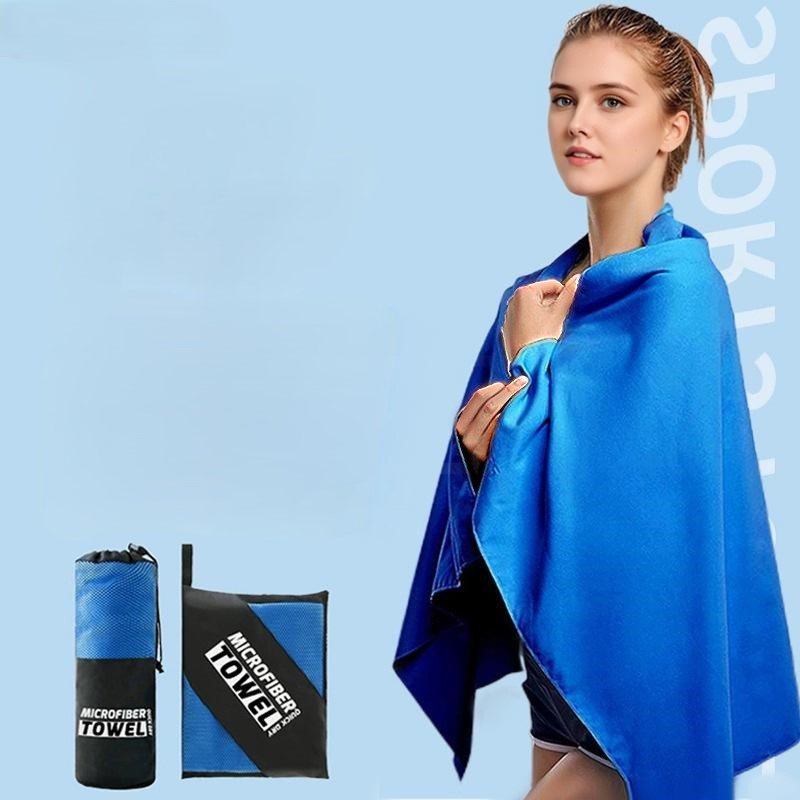
This weight difference becomes especially important when you’re traveling. Many no sand beach towels come with their own compact carrying pouch. When folded, they can be about the size of a water bottle, which fits easily into backpacks, carry-on luggage, or even large purses.
Moreover, because they’re so light and compact, you can easily bring multiple towels without adding significant weight to your luggage. This is perfect for longer beach vacations where you want fresh towels throughout your trip. Our microfiber towels are specifically designed with travelers in mind, offering maximum performance in minimum space.
Sand-Resistant Beach Towels for Travel, Family, and Resorts
Different users have different needs, so let’s explore which sand resistant beach towel features work best for various situations.
Best for Solo Travelers
If you’re backpacking through coastal destinations or taking a solo beach vacation, your towel needs to be your reliable companion without weighing you down. Solo travelers should prioritize:
- Ultra-lightweight construction: Look for towels in the 200-280 GSM range that pack down to bottle size.
- Quick-dry performance: Essential when you’re moving between locations and need your towel dry by morning.
- Durability: Choose polyester-nylon blends that can handle frequent washing in various water conditions.
- Multi-functionality: Some travelers prefer larger sand proof beach towels that can double as blankets or sarongs.
Additionally, consider a towel with a built-in corner pocket or loop for securing your keys or phone while you swim. These small features make a big difference when you’re traveling alone and need to keep valuables safe.
Family Beach Days with Kids
Families need sand resistant beach towels that can handle chaos, spills, and constant use. When shopping for family beach towels, consider these factors:
First, you’ll want multiple towels in different sizes. Kids often do better with smaller, lighter towels they can carry themselves, while parents might prefer standard or extra-large sizes. Furthermore, bright colors or fun patterns help children identify their own towels, which prevents the inevitable “that’s my towel!” arguments.
Second, easy maintenance is crucial for families. Choose quick dry sand free towels that can be tossed in the washing machine without special care requirements. Because children’s towels get dirty quickly, you’ll appreciate fabrics that resist staining and maintain their appearance wash after wash.
Third, consider the sand-shaking factor. When you’re packing up with tired, sandy kids, you don’t want to spend 20 minutes trying to clean towels. With proper sand-resistant towels, a few quick shakes gets them beach-ready for the car ride home, which keeps your vehicle much cleaner.
Resort and Hotel Use
Hotels, beach resorts, and vacation rentals have unique towel requirements that combine guest satisfaction with operational efficiency. This is where bulk manufacturing partnerships become valuable.
Resort managers increasingly prefer sand resistant beach towels because they solve multiple operational challenges simultaneously:
- Reduced laundry costs: Quick-dry towels use less energy in commercial dryers and can even air-dry between uses.
- Lower replacement rates: Synthetic sand proof beach towels resist fading, chlorine damage, and wear much better than cotton alternatives.
- Less sand in facilities: When guests use sand-resistant towels, they track significantly less sand into rooms, pools, and common areas.
- Premium guest experience: Modern travelers appreciate lightweight, quick-dry amenities that enhance rather than hinder their vacation.
According to Hotel Management International, properties that switch to microfiber beach towels report 30-40% reductions in textile-related operational costs. Moreover, guests often ask where they can purchase the same towels for home use, which creates additional revenue opportunities.
As a leading beach towel manufacturer in China, Favor Houseware works with resorts worldwide to create custom-branded sand resistant beach towels that enhance their brand identity while meeting strict hospitality standards.
How to Test a Sand-Free Towel Before You Buy
Whether you’re shopping online or in a store, knowing how to evaluate a sand resistant beach towel helps you make a confident purchase. Here are the key tests to perform:
- Check the fabric label: Look for materials like “microfiber,” “polyester,” “polyamide,” or “nylon blend.” If the label says 100% cotton terry, it’s not a true sand-resistant towel regardless of marketing claims.
- Feel the surface texture: Run your hand across both sides of the towel. A genuine sand proof beach towel should feel relatively smooth and tight, not fuzzy or looped like traditional towels. Additionally, the fabric should feel slightly slick or silky rather than rough.
- Test the weight: If possible, compare the towel’s weight to a standard cotton towel of similar size. A proper quick dry sand free towel should feel noticeably lighter—sometimes almost surprisingly so for its size.
- Examine the weave: Hold the towel up to light. You should see a very tight, dense weave with minimal light passing through. Loose weaves create gaps where sand can lodge and stick.
- Read customer reviews carefully: When shopping online, look specifically for reviews that mention sand resistance and drying time. Furthermore, reviews from travelers and beachgoers tend to be more reliable than general comments about softness.
- Check the care instructions: Quality sand-resistant towels should be easy to care for—typically machine washable in cold water without fabric softener. Complicated care requirements often indicate lower-quality materials.
If you’re purchasing from a manufacturer like Favor Houseware Co., Ltd., don’t hesitate to request free fabric samples before placing large orders (you only pay freight). Reputable manufacturers are happy to provide samples so you can test performance yourself.
Care & Washing Tips to Keep Towels Sand-Resistant Longer
Proper maintenance extends the life of your sand resistant beach towel and preserves its performance. Fortunately, caring for these towels is actually easier than caring for traditional cotton towels.
Washing Best Practices
Follow these simple guidelines to keep your sand proof beach towel in excellent condition:
- Use cold or warm water: Hot water isn’t necessary for microfiber and can actually damage the fibers over time. Cold water cleans just as effectively and saves energy too.
- Avoid fabric softener completely: This is the most important rule. Fabric softeners coat the fibers with a waxy residue that reduces absorbency and interferes with sand resistance. Similarly, dryer sheets should also be avoided.
- Use mild detergent: You don’t need much—microfiber towels clean easily with just a small amount of regular laundry detergent. Harsh chemicals or bleach can break down the synthetic fibers and cause fading.
- Wash separately or with similar items: Washing your quick dry sand free towels with cotton towels can cause lint transfer, which reduces their smooth surface. Instead, wash them with other synthetic items like activewear or swimsuits.
- Don’t overload the washing machine: Microfiber towels need room to agitate properly. Overloading prevents thorough cleaning and can cause wrinkles that are hard to remove.
“The number one mistake we see customers make is using fabric softener on microfiber towels. It permanently reduces performance. Instead, vinegar in the rinse cycle works wonderfully as a natural fabric conditioner without coating the fibers.” — Favor Houseware Quality Control Team
Drying and Storage
Because these are quick dry sand free towels, drying them is incredibly easy:
- Air drying is ideal: Simply hang your towel outdoors or indoors, and it will dry completely in 30-60 minutes in most conditions. This method uses no energy and extends towel lifespan.
- Low-heat tumble drying works too: If you must use a dryer, choose the lowest heat setting. High heat can melt or damage synthetic fibers over time. Furthermore, most microfiber towels come out almost dry after the spin cycle anyway.
- Shake before storing: Always shake out your towel after the beach and before washing. This removes loose sand and prevents it from getting embedded during the wash cycle.
- Store in a dry location: Unlike cotton towels that can develop musty smells, microfiber towels are less prone to odor. However, proper storage in a dry cabinet or closet still helps maintain freshness.
- Fold loosely or roll: Avoid tight creasing that can damage fibers. Rolling is often better than folding, especially for travel storage.
When properly cared for, high-quality sand resistant beach towels from manufacturers like Favor Houseware can last for years of regular beach use while maintaining their sand-resistant and quick-dry properties.
Eco-Friendly and Recycled Sand-Free Beach Towels
As environmental awareness grows, many consumers want sand resistant beach towels that perform well without harming the planet. Fortunately, the industry has responded with several sustainable options.
Recycled Polyester Technology
One of the most exciting developments in beach towel manufacturing is the use of recycled polyester (rPET). This material is create by collecting and processing plastic bottles and other plastic waste, then spinning it into new fibers. The result is a sand proof beach towel that performs identically to virgin polyester while giving new life to plastic that would otherwise end up in landfills or oceans.
According to the U.S. Environmental Protection Agency, recycling plastic into textile products significantly reduces carbon emissions compared to producing virgin synthetic fibers. Furthermore, each towel made from recycled materials typically repurposes 10-15 plastic bottles, which makes a tangible environmental impact.
Favor Houseware specializes in eco-friendly manufacturing practices using certified sustainable materials that meet international environmental standards while delivering the same excellent sand resistance and quick-dry performance customers expect.
Sustainable Manufacturing Practices
Beyond the materials themselves, eco-conscious manufacturing processes make a significant difference:
- Water-based dyes: Modern quick dry sand free towels can be colored using water-based reactive dyes that produce less chemical waste than traditional dyeing methods.
- OEKO-TEX certification: This independent certification guarantees that towels are free from harmful chemicals and safe for human skin and the environment. Look for this label when shopping for eco-friendly options.
- Energy-efficient production: Manufacturers committed to sustainability use renewable energy sources and optimize production processes to minimize carbon footprints.
- Reduced packaging: Many eco-friendly sand resistant beach towels now come in minimal, recyclable packaging instead of excessive plastic wrapping.
Moreover, the inherent durability of synthetic sand-resistant towels makes them more sustainable than cotton alternatives. Because they last longer and require less frequent replacement, they generate less textile waste over their lifetime. Additionally, their quick-dry properties mean lower energy consumption whether you’re air-drying at home or using commercial dryers in resorts.
Balancing Performance and Sustainability
Some environmentally conscious consumers worry that synthetic materials aren’t as “natural” as cotton. However, when we consider the complete environmental picture, recycled synthetic sand proof beach towels often have a smaller ecological footprint than cotton alternatives. Cotton production requires enormous amounts of water, pesticides, and land, whereas recycled polyester diverts plastic waste and uses far fewer natural resources.
The key is choosing products from manufacturers who prioritize both performance and environmental responsibility. Favor Houseware holds certifications including OEKO-TEX STANDARD 100 for all materials; GRS for microfiber materials, demonstrating commitment to sustainable and responsible manufacturing practices.
Bulk and OEM Sand-Resistant Beach Towels for Brands and Resorts
Whether you’re launching a retail brand, managing a resort, or creating corporate gifts, partnering with the right manufacturer makes all the difference. Let’s explore what to look for in a bulk sand resistant beach towel supplier.
Custom Logo and Sublimation Printing
One of the biggest advantages of working with an experienced manufacturer is access to advanced customization options. Modern sand proof beach towels can be customized in several ways:
Sublimation printing is the gold standard for microfiber towels. This process uses heat to transfer dye directly into the fabric fibers, creating vibrant, permanent designs that won’t crack, peel, or fade even after hundreds of washes. Consequently, sublimation is perfect for:
- Complex logos with multiple colors and gradients
- Full-coverage designs that span the entire towel surface
- Photographic images or detailed artwork
- Resort and hotel branding that needs to withstand heavy commercial use
Digital printing with a standard digital-print MOQ of 100 pieces per design; mixed designs are quoted at a higher price is another advantage offered by Favor Houseware. This method bonds dye chemically with the fabric, creating durable prints that maintain the towel’s soft feel and quick-dry properties.
Additionally, manufacturers can offer:
- Embroidered logos: For a premium, textured appearance on corner tags or borders
- Woven labels: Sewn-in tags with your brand name, care instructions, and custom messaging
- Custom packaging: Branded pouches, belly bands, or retail-ready boxes that enhance your product presentation
- Personalized branding: Complete customization for wholesale and promotional towels
MOQ and Lead Times
Understanding minimum order quantities (MOQ) and production timelines helps you plan effectively:
Low MOQ advantage: Unlike many manufacturers requiring thousands of pieces, Favor Houseware offers MOQ starting from just 100 pieces. This flexibility supports businesses of all sizes—from small startups testing the market to large corporations placing bulk orders. For digital printing, there’s even a standard digital-print MOQ of 100 pieces per design; mixed designs are quoted at a higher price requirement, making customization accessible to everyone.
Production lead times: Standard Bulk production: digitally printed microfiber 20–35 days; cotton reactive print 40–45 days; jacquard 45–50 days; Turkish yarn-dyed towels 40–45 days; ponchos 30–35 days; magnetic towels 25–35 days. Timing depends on quantity. Lead times are counted from order placement and receipt of the deposit. Shipping time is additional. This includes:
Digitally printed microfiber and magnetic towel samples take 7–10 days; cotton reactive print, jacquard, Turkish yarn-dyed towel and poncho samples take 15–20 days. Lead times are counted from order placement and receipt of the deposit. Shipping time is additional.
For urgent needs, Favor Houseware also maintains available stock for fast shipping. Furthermore, establishing a relationship with a reliable manufacturer means smoother reorders with faster turnaround times.
Why Choose a China Manufacturer
China has become the global leader in textile manufacturing for several compelling reasons, particularly for sand resistant beach towels:
Cost efficiency without sacrificing quality: Chinese manufacturers benefit from economies of scale, streamlined supply chains, and competitive labor costs. However, this doesn’t mean lower quality—many Chinese factories produce towels for the world’s leading brands using state-of-the-art equipment and strict quality control processes.
Advanced technology and innovation: China leads in textile technology development, including microfiber production, sublimation printing, and sustainable manufacturing processes. According to TXM manufacturing case studies, Chinese textile facilities often feature more advanced automation and quality systems than facilities in other countries. The history of Chinese manufacturing demonstrates continuous innovation and quality improvement over decades.
Complete supply chain integration: Working with a Chinese manufacturer means access to the entire supply chain—from raw material sourcing to finished product packaging—all in one geographic region. This integration reduces costs, improves communication, and speeds up production times. Favor Houseware’s factory is strategically located in Yiwu, Jinhua, Zhejiang Province, China, a major hub for textile manufacturing and global trade.
Customization expertise: Because Chinese manufacturers work with diverse international clients, they’re experienced in meeting various regional standards, certifications, and customization requirements. Whether you need REACH compliance for Europe, CPSIA standards for the U.S., or specific eco-certifications, experienced Chinese manufacturers understand these requirements.
Scalability: As your business grows, Chinese manufacturers can scale production efficiently. They have the capacity to handle both initial test orders of 100 pieces and eventual large-scale orders of tens of thousands of sand proof beach towels.
At chinatowelmanufacturer.com, we combine Chinese manufacturing advantages with international quality standards and customer service excellence. Our team provides professional service, supports multiple payment methods, ensures secure trade processes, and offers transparent communication throughout the entire production process.
Quality Control and Certifications
When selecting a bulk supplier for sand resistant beach towels, verify their quality control processes and certifications:
- OEKO-TEX® STANDARD 100 certification is available for all materials. GRS certification is available for microfiber materials. Ask us for documentation applicable to your material and order.
- OEKO-TEX Standard 100: Ensures products are free from harmful substances and safe for human skin
- OEKO-TEX® STANDARD 100 certification is available for all materials. GRS certification is available for microfiber materials. Ask us for documentation applicable to your material and order.
- OEKO-TEX® STANDARD 100 certification is available for all materials. GRS certification is available for microfiber materials. Ask us for documentation applicable to your material and order.
- REACH and CPSIA compliance: Meets European and U.S. safety standards for textile products
- Strict quality inspection: Every towel undergoes thorough quality control from raw materials through the complete manufacturing process (weaving, printing, cutting, sewing, inspecting, packing) before shipping
Favor Houseware provides documentation for all certifications and maintains the highest quality standards throughout the production process. With 15 years of manufacturing experience, we’ve earned the trust of satisfied international clients worldwide who praise our quality, customization services, and reliable delivery.
Frequently Asked Questions About Sand-Resistant Beach Towels
Do sand-free beach towels really work or is it just marketing?
Sand-free beach towels absolutely work, though they’re not 100% immune to all sand. The key difference is that properly designed sand resistant beach towels release sand much more easily than traditional cotton towels. Independent product tests consistently show that microfiber and mesh towels retain 80-90% less sand than cotton terry after the same beach use. When you shake a high-quality sand-free towel, most sand falls off immediately, whereas cotton towels hold onto sand stubbornly even after vigorous shaking. Therefore, while the name “sand-free” is somewhat aspirational, these towels genuinely deliver dramatically better sand resistance than traditional alternatives.
Are microfiber beach towels better than cotton for the beach?
For beach-specific use, microfiber towels offer several clear advantages over cotton. First, they resist sand infiltration thanks to their smooth, tight weave. Second, they dry up to three times faster, which means less time feeling damp and uncomfortable. Third, they’re significantly lighter and more compact, making them ideal for travel and carrying to the beach. However, cotton towels do feel softer and more luxurious against the skin, which some people prefer. The best choice depends on your priorities: if sand resistance, quick drying, and portability matter most, choose microfiber; if maximum softness is your top concern and you don’t mind extra weight and sand, cotton remains a solid option. Many beach-goers actually keep both types and choose based on the specific situation. You can explore both microfiber options and cotton beach towels to find your perfect match.
Are sand-resistant towels good for kids and families?
Yes, sand resistant beach towels are excellent for families with children. Kids tend to get especially sandy during beach play, and sand-resistant towels make cleanup much easier at the end of the day. Additionally, these towels dry quickly, which is valuable when children need to dry off multiple times throughout a beach visit. The lightweight design means kids can carry their own towels without struggle, teaching responsibility while reducing what parents need to haul. Furthermore, many families appreciate how these towels keep car interiors cleaner—less sand embedded in towels means less sand transferred to car seats and carpets. Some parents initially worry that synthetic towels might not feel as soft as cotton, but most children don’t notice or care about the texture difference, especially when they’re having fun at the beach. Our microfiber towel collection includes kid-friendly sizes and fun designs perfect for young beach-goers.
What size beach towel is best for the beach?
The most versatile size for sand proof beach towels is approximately 160 × 80 cm (63 × 31 inches), which provides enough space for adults to lie comfortably while remaining easy to pack and carry. However, the “best” size depends on how you’ll use the towel. Solo travelers and teenagers often prefer standard sizes for maximum portability, while couples might choose extra-large towels (180 × 100 cm or bigger) to share space. Families with young children typically do better with child-sized towels (100 × 50 cm) that kids can manage independently. Consider also that larger towels take longer to dry and weigh more when wet, even quick-dry microfiber versions. Therefore, if you’re backpacking or moving between locations frequently, prioritize compact sizing. Conversely, if you’re staying at one resort for a week and want maximum lounging space, larger sizes including round beach towels work wonderfully.
How should I wash a sand-resistant or microfiber beach towel?
Washing quick dry sand free towels is simple: use cold or warm water with regular mild detergent, and completely avoid fabric softeners or dryer sheets. Fabric softener is the biggest mistake people make because it coats microfiber with waxy residue that destroys absorbency and sand resistance. Instead, if you want a natural fabric conditioner effect, add half a cup of white vinegar to the rinse cycle. Wash your sand-resistant towels separately from cotton items to prevent lint transfer, and don’t overload the washing machine so towels can agitate properly. For drying, air-drying is ideal and takes only 30-60 minutes in most conditions. If you use a machine dryer, choose low heat—high heat can damage synthetic fibers over time. Finally, shake towels vigorously before washing to remove loose sand, which prevents sand from embedding during the wash cycle. Following these simple care instructions will keep your towels performing excellently for years.
Are sand-free towels eco-friendly?
Modern sand resistant beach towels can be quite eco-friendly, especially those made from recycled materials. Many manufacturers now produce microfiber towels using recycled polyester (rPET) created from reclaimed plastic bottles, giving new life to materials that would otherwise become waste. Additionally, synthetic sand-resistant towels typically last much longer than cotton alternatives, which reduces replacement frequency and textile waste. They also require less water and energy for washing and drying thanks to their quick-dry properties. However, it’s important to choose towels from manufacturers committed to sustainable practices, including safe dyes, ethical labor, and environmentally responsible production methods. Look for certifications like OEKO-TEX STANDARD 100 for all materials; GRS for microfiber materials approval. Favor Houseware maintains all these certifications and prioritizes eco-friendly manufacturing practices using certified sustainable materials while maintaining excellent sand resistance and performance.
Can I get custom logo or OEM sand-resistant beach towels in bulk?
Absolutely! Custom sand proof beach towels are widely available for businesses, resorts, promotional campaigns, and retail brands. Professional manufacturers like Favor Houseware at chinatowelmanufacturer.com offer comprehensive OEM services including custom sizes, fabric composition, GSM specifications, full-color sublimation printing, digital printing with a standard digital-print MOQ of 100 pieces per design; mixed designs are quoted at a higher price, embroidered logos, branded packaging, and personalized branding options. Minimum order quantities start from just 100 pieces, making customization accessible to businesses of all sizes. Bulk production: digitally printed microfiber 20–35 days; cotton reactive print 40–45 days; jacquard 45–50 days; Turkish yarn-dyed towels 40–45 days; ponchos 30–35 days; magnetic towels 25–35 days. Timing depends on quantity. Lead times are counted from order placement and receipt of the deposit. Shipping time is additional., with available stock for faster delivery when needed. Working with an experienced manufacturer with 15 years of expertise ensures your custom towels meet quality standards, pass necessary certifications (OEKO-TEX STANDARD 100 for all materials; GRS for microfiber materials), and arrive on schedule. Furthermore, established manufacturers can help with design optimization, material selection, and cost management to maximize your return on investment.
What GSM is best for a sand-resistant beach towel?
For sand resistant beach towels, the optimal GSM range is typically 200-350 grams per square meter. Towels in the 200-280 GSM range offer maximum portability and the fastest drying times, making them perfect for travel and backpacking. Mid-range towels at 280-320 GSM provide a nice balance between lightweight convenience and substantial absorbency for general beach use. Towels at 320-350 GSM feel more cushioned and luxurious while still maintaining quick-dry and sand-resistant properties. Going below 200 GSM often results in towels that feel too thin and don’t absorb effectively, while exceeding 350 GSM starts adding weight and slowing drying time without significant benefit. Remember that GSM is just one factor—fabric quality, weave tightness, and material composition also significantly impact performance. When ordering custom towels from Favor Houseware, discuss your specific use case with our experienced team to determine the ideal GSM for your needs.
Are sand-resistant towels suitable for hotels and beach resorts?
Yes, quick dry sand free towels are increasingly popular in the hospitality industry for excellent reasons. Hotels and beach resorts benefit from reduced laundry costs because these towels dry faster and require less energy in commercial dryers. They also last longer than cotton alternatives, resisting fading from chlorine, saltwater, and sun exposure, which reduces replacement expenses. Furthermore, guests appreciate the modern, high-performance amenity, and sand-resistant towels significantly reduce the amount of sand tracked into rooms and facilities. Many upscale properties now offer branded microfiber beach towels as part of their premium service package, differentiating themselves from competitors still using traditional cotton. Resort managers can work with manufacturers to create custom-branded sand resistant beach towels that enhance brand identity while improving operational efficiency. Favor Houseware partners with resorts worldwide to provide bulk custom towels meeting strict hospitality industry standards, with flexible MOQ starting from 100 pieces and complete quality assurance.
Conclusion: Choose the Right Sand-Resistant Beach Towel for Your Needs
Choosing the best sand resistant beach towels doesn’t have to be complicated once you understand what makes these towels work. The key factors are simple: look for microfiber or polyester-nylon blends with tight weaves, prioritize towels in the 200-350 GSM range for optimal performance, and choose sizes that match your actual usage needs rather than just buying the biggest option available.
Remember that sand proof beach towels offer benefits far beyond just sand resistance. They dry incredibly fast, which means less odor and bacteria growth. They pack down to a fraction of the size of cotton towels, making them perfect for travel. They last longer and resist fading, which saves money over time. Moreover, when made from recycled materials and produced with eco-friendly manufacturing practices, they represent an environmentally responsible choice that reduces plastic waste.
Whether you’re a solo traveler looking for the perfect packable towel, a family seeking easier beach day cleanup, or a resort manager wanting to improve guest experience while reducing operational costs, the right quick dry sand free towel makes a tangible difference.
Ready to Experience Sand-Free Beach Days?
For Individual Buyers: Explore our complete range of premium microfiber beach towels, sand-free beach towels, cotton beach towels, round beach towels, and Turkish beach towels. Every towel is backed by our quality guarantee and designed to make your beach experience better.
For Businesses, Resorts & Brands: Partner with Favor Houseware for custom OEM sand-resistant beach towels. We offer:
- ✓ Custom sizing, GSM, and material composition (various colors, materials, and designs)
- ✓ Digital printing with a standard digital-print MOQ of 100 pieces per design; mixed designs are quoted at a higher price
- ✓ Full-color sublimation and reactive printing with imported equipment
- ✓ Eco-friendly sustainable materials and manufacturing practices
- ✓ International certifications (OEKO-TEX STANDARD 100 for all materials; GRS for microfiber materials)
- ✓ Ultra-low MOQ starting from only 100 pieces
- ✓ Fast delivery with available stock options
- ✓ Complete OEM support with 15 years of manufacturing experience
- ✓ Free stock samples available (you only pay freight)
- ✓ Multiple payment methods and secure trade processes
Contact us today at chinatowelmanufacturer.com or explore our complete product range. Let’s create the perfect sand-resistant beach towels for your needs! Shipped safely from our factory in Yiwu, Jinhua, Zhejiang Province, China.
Favor Houseware Co., Ltd. is a qualified beach towel manufacturer with 15 years of experience specializing in custom and wholesale beach towels. Learn more about our high-quality materials, advanced manufacturing processes, and commitment to excellence at chinatowelmanufacturer.com. We also offer specialized products including sports cooling towels, pet towels, and more.