
⚡ Quick Answer: To clean a surf poncho towel, shake out sand, then machine wash in cool or warm water with a mild detergent. Avoid bleach and fabric softener. Tumble dry on low heat — or line dry fully — before storing. Wash every 2–4 uses depending on your climate and skin type.
🏄 Key Takeaways at a Glance
| Question | Quick Answer |
|---|---|
| How do you wash a surf poncho? | Cool/warm machine wash, mild detergent, no bleach or softener |
| How often should you wash it? | Every 2–4 uses (more often in humid climates) |
| Can it go in the dryer? | Yes — low heat only; high heat shrinks and damages fibers |
| Best material for warmth? | Heavy cotton terry — plush, absorbent, very cozy |
| Best material for travel? | Microfiber or Turkish cotton — lightweight and quick-dry |
| How long does one last? | 2–5+ years with proper care and quality construction |
| Can I customize with a logo? | Yes — from 100 pieces with ChinaTowelManufacturer.com |
📊 Surf Poncho Towel Market: Why It Matters
First, let’s look at the big picture. The surf poncho market is growing fast. In fact, it is one of the most exciting segments in the entire beach towel industry right now.
| Market Metric | Data |
|---|---|
| Global surf poncho market size (2025) | USD 0.91 billion |
| Projected surf poncho market size (2034) | USD 1.62 billion |
| Surf poncho CAGR (2025–2034) | 6.4% |
| Beach towel market size (2026) | USD 4.5 billion |
| Projected beach towel market size (2036) | USD 8.4 billion |
| North America share of surf poncho market (2025) | ~38% |
| Fastest-growing region | Asia Pacific — CAGR 8.1% to 2034 |
Furthermore, custom and personalized surf ponchos are one of the highest-growth sub-segments. Brands that offer unique designs can charge premium prices and build strong customer loyalty. This is exactly why so many surf schools, shops, and outdoor brands are ordering custom surf poncho towels today.
1. What Is a Surf Poncho Towel and Why Surfers Love It
Definition: A surf poncho towel is a hooded, oversized wearable towel. It lets you dry off, stay warm, and change clothes privately — all at the same time. Most surf ponchos are knee-length. They have a front kangaroo pocket and a wide opening so you can lift your arms inside to change.

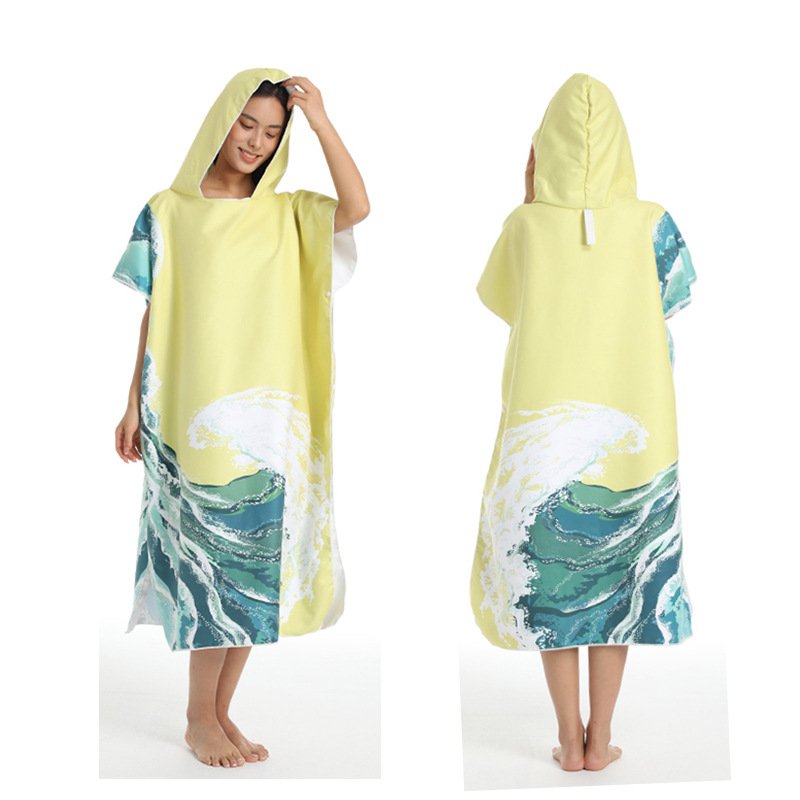
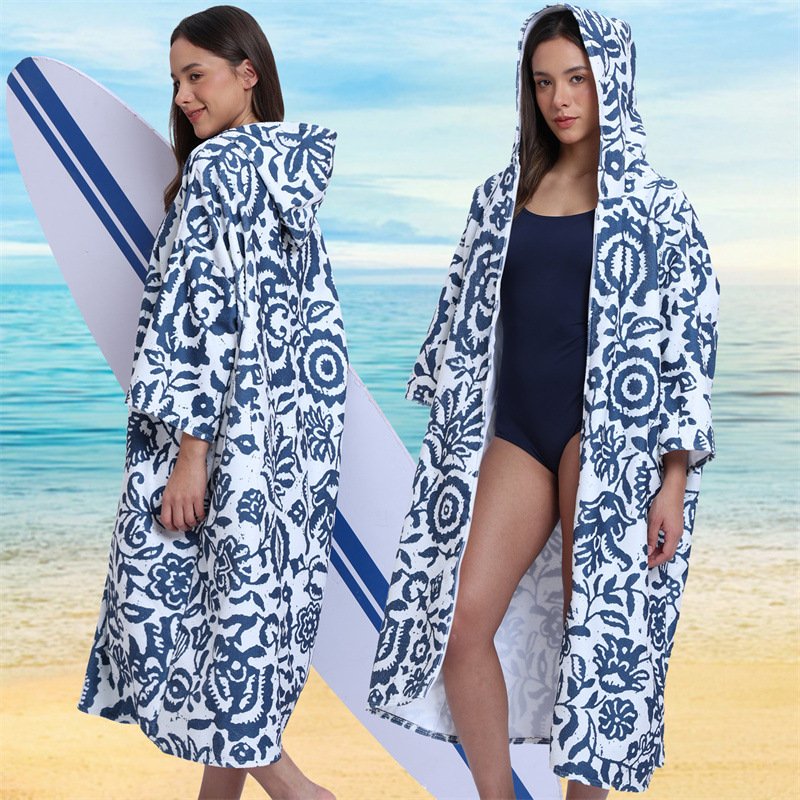
Simply put, a surf poncho does things a regular towel simply cannot. Here is why surfers love it:
- 🔒 Privacy — Change in a parking lot or on a crowded beach without exposing yourself
- 🌊 Warmth after cold sessions — Traps body heat so you stop shivering faster
- 💨 Wind protection — Blocks the cold breeze that chills wet skin
- 👐 Hands-free design — Both hands stay free while you dry off
- 🎒 Convenience — One garment replaces a towel, robe, and changing tent
In short, most surfers who try a poncho never go back to a regular towel. Once you use one, it is very hard to imagine going without it.
2. Surf Poncho vs Regular Beach Towel: Key Differences
Not sure if a surf poncho is worth it over a standard beach towel? Let’s compare them directly so you can decide quickly.
| Feature | Surf Poncho Towel | Regular Beach Towel |
|---|---|---|
| Privacy | ✅ Full coverage for changing | ❌ None |
| Warmth | ✅ Traps body heat, blocks wind | ⚠️ Minimal warmth |
| Hood | ✅ Yes — dries hair too | ❌ No |
| Hands-free use | ✅ Wearable design | ❌ Must be held |
| Price | ⚠️ Higher upfront cost | ✅ Cheaper |
| Packability | ⚠️ Bulkier (cotton terry models) | ✅ Flat and compact |
| Best for | Regular surfers, cold water, privacy | Casual beach days, travel |
Additionally, some 4-season poncho models combine a soft towel inner layer with a weather-resistant outer shell. These work great for cold, rainy surf conditions where a flat towel would be useless.
“A surf poncho is not just a towel — it’s a warm, private changing room you wear on your shoulders.”
3. How to Clean a Surf Poncho Towel Properly
Knowing how to clean a surf poncho towel correctly is the most important thing you can do for its lifespan. Poor washing habits are the number-one reason ponchos wear out early. Fortunately, the process is straightforward.
How Often Should You Wash a Surf Poncho Towel?
Think of your surf poncho like a bath towel — but treat it stricter. Salt, sand, and humidity make beach gear dirtier faster than regular household items.
| Usage Situation | Recommended Wash Frequency |
|---|---|
| Healthy user — poncho fully dries between sessions | Every 3–4 uses |
| Humid climate or stored damp (e.g. car trunk) | Every 2 uses |
| Sensitive skin or compromised immunity | After every 1–2 uses |
| Surf school / rental use (shared by multiple people) | After every single use |
Moreover, if you leave your poncho bunched in a bag or car between sessions, always wash it sooner. Salt water and damp fabric together create bacteria very quickly.
Step-by-Step: How to Clean a Surf Poncho Towel Properly
- Shake out sand and debris at the beach before putting the poncho in your bag.
- Rinse with fresh cool water after every session to remove salt, chlorine, and sand.
- Machine wash in cool or warm water (max 30°C / 86°F) on a gentle cycle.
- Use a mild, non-biological detergent. Avoid bleach — it destroys fibers.
- Skip the fabric softener. It coats fibers with wax and kills absorbency.
- Wash with similar fabrics — cotton with cotton; microfiber with synthetics.
- Tumble dry on low heat or line dry. Remove from dryer while slightly damp.
- Store only when fully dry to prevent mildew and musty odors.
As a result of following these steps, your surf poncho towel will stay soft, smell fresh, and last significantly longer.
⚠️ Pro Tip: Add half a cup of white distilled vinegar to the rinse cycle instead of fabric softener. It naturally softens fibers without blocking absorbency. It also kills odor-causing bacteria.
Care Instructions by Material: Terry, Turkish Cotton, Microfiber
| Material | Wash Temp | Dryer OK? | Special Notes |
|---|---|---|---|
| Cotton Terry | Cool–warm (30°C) | Low heat only | Shrinks easily in hot water |
| Turkish Cotton | Cool (30°C) | Low heat only | Gets softer with each wash |
| Microfiber | Cool (30°C or less) | Air dry preferred | No fabric softener — ever. Wash separately from cotton |
| Bamboo Blend | Cool (30°C) | Low heat or air dry | Gentle cycle; very soft — treat like delicates |
4. Material Guide: Cotton vs Microfiber vs Bamboo Surf Ponchos
Choosing the right material is just as important as knowing how to wash your surf poncho. Each material has clear strengths and weaknesses. Here is a side-by-side breakdown.


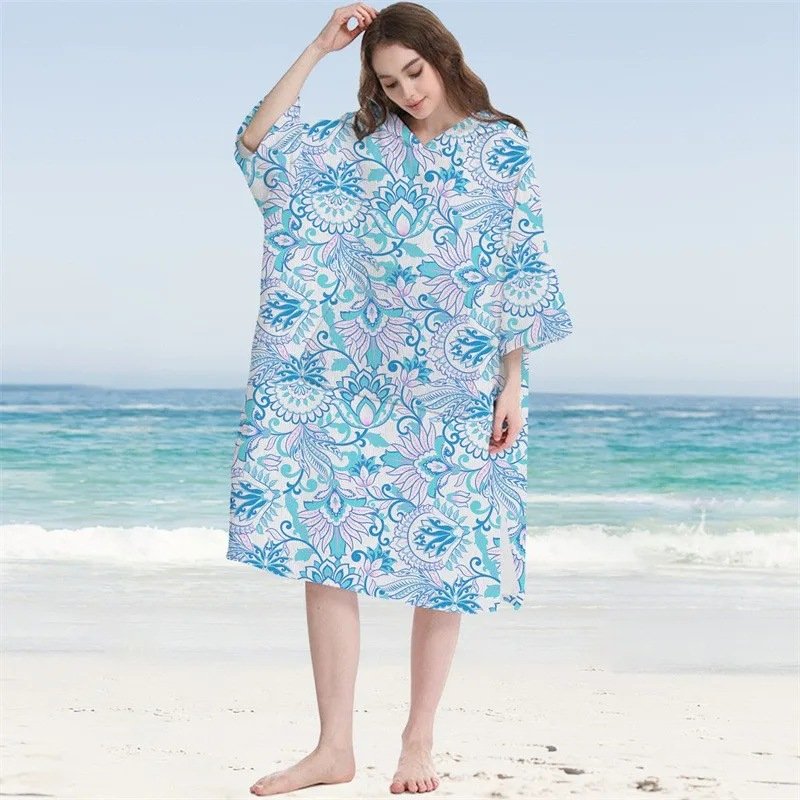
| Feature | Cotton Terry / Turkish Cotton | Microfiber / Recycled Polyester | Bamboo Blend |
|---|---|---|---|
| Absorbency | ⭐⭐⭐⭐⭐ Excellent | ⭐⭐⭐ Good | ⭐⭐⭐⭐ Very good |
| Drying speed | ⭐⭐ Slow (Turkish faster) | ⭐⭐⭐⭐⭐ Very fast | ⭐⭐⭐ Medium |
| Feel / softness | Plush, cozy, natural | Smooth, can feel synthetic | Silky-soft, premium feel |
| Packability | Heavier/bulkier | Lightweight, packs tiny | Medium weight |
| Odor/mildew risk | Higher (dries slowly) | Lower (dries fast) | Low (naturally antibacterial) |
| Eco-friendly? | ✅ Organic cotton available | ✅ Recycled polyester options | ✅ Yes — renewable crop |
| Best for | Cold water, winter surfing, warmth | Travel, warm climates, daily use | Premium brands, sensitive skin |
As a general rule, many “best surf poncho” reviews recommend heavy cotton terry for cold-water surfers who need maximum warmth and absorbency. On the other hand, microfiber and Turkish cotton are better choices for traveling or surfing in warm weather. You can explore our range of cotton beach towels and microfiber beach towels to see the material quality we work with.
5. How to Dry and Store Your Surf Poncho to Prevent Odor and Mildew
Even after a perfect wash, improper drying and storage can ruin your surf poncho fast. Mildew and musty odors are almost always caused by storing a damp poncho. Here is how to avoid that completely.
Drying Tips
- 🌬️ Always hang it open and spread out — don’t fold or bunch it before it dries
- ☁️ Keep it out of direct strong sunlight — UV rays fade colors and weaken fibers over time
- 🌀 Tumble dryer: low heat only — remove while still slightly damp to prevent stiffness
- ❌ Never iron your surf poncho — heat flattens the terry loops and reduces absorbency
- 💨 Choose fast-drying fabrics if you live in a humid climate or surf daily — microfiber and Turkish cotton are best here
Storage Tips
- ✅ Store only when 100% dry — even slight dampness causes mildew within hours
- 🛍️ Use a breathable bag or hook — avoid sealed plastic bags when any moisture is present
- 🚗 Do not leave it bunched in your car trunk — a damp poncho in a hot car is a recipe for permanent odor
- 🏠 At home, hang on a peg or towel rail in a ventilated area
🦠 Mildew Fix: If your poncho already smells musty, soak it in a mix of 1 cup white vinegar per gallon of cool water for 30 minutes. Then machine wash normally. Baking soda in the wash cycle also works well to neutralize deep odors.
6. How Long Does a Surf Poncho Towel Last (and When to Replace It)
A high-quality surf poncho towel, with proper care, can easily last 2 to 5+ years. However, heavy surf use, salt water, and frequent washing will naturally shorten that timeline. Budget ponchos made with low-GSM fabric often show wear within a single season.
Signs It’s Time to Replace Your Surf Poncho
Watch for these clear warning signs:
- 🧵 Fraying edges or unraveling seams — a sign of poor stitch quality breaking down
- 🪨 Stiff areas that don’t soften after washing — mineral buildup or fiber damage
- 💧 Poor absorbency — water runs off instead of soaking in
- 👃 Permanent musty odor that doesn’t go away after washing
- 🕳️ Thinning fabric with holes or pilling across the body
- 🎨 Heavy color fading that affects the look and feel of the fabric
Consequently, investing in a higher GSM (400–600 GSM) surf poncho with double-stitched seams from the start will save you money over time. A cheap $15 poncho replaced every season costs far more than a quality poncho that lasts five years.
“The cheapest towel is the one you keep buying. Invest in quality once and care for it well.”
7. Surf Towel Maintenance Checklist Before and After Each Session
This simple checklist keeps your surf poncho in top condition all season long. Additionally, it takes less than two minutes to follow after every surf. Save it or print it out.
✅ Before Your Session
- Check for any tears, holes, or loose seams
- Make sure it is fully dry before packing
- Shake out any leftover sand from the last session
🌊 After Your Session
- Shake out sand and debris at the beach before putting it in your bag
- Rinse with fresh water if you surfed in salt water or a pool
- Hang it open immediately — never stuff it in a bag while wet
- Machine wash every 2–4 uses based on your climate and skin type
🗓️ Monthly Maintenance
- Inspect hood stitching and main seams for wear
- Check that the pocket seams are still secure
- Avoid over-drying on high heat — do a dryer check
- Follow the care label to maintain absorbency and softness
- Consider a vinegar soak if absorbency feels reduced
8. Common Mistakes That Ruin Surf Poncho Towels (and How to Avoid Them)
Even well-meaning surfers make these mistakes regularly. Therefore, learning what not to do is just as important as knowing the right care steps.
| ❌ Common Mistake | ✅ What to Do Instead |
|---|---|
| Using fabric softener | Use white vinegar in the rinse cycle instead |
| Washing in hot water | Always use cool or warm water (max 30°C) |
| Using bleach for stains | Use mild dish soap or oxygen-based stain remover |
| Storing it damp | Always hang open until completely dry before storing |
| Tumble drying on high heat | Use low heat only; remove while slightly damp |
| Leaving it in direct sun for hours | Dry in shade or indirect light to protect colors |
| Ironing the poncho | Never iron — it flattens terry loops permanently |
| Overloading the washing machine | Wash with similar fabrics; leave room for proper rinsing |
9. What Makes the “Best” Surf Poncho (Features to Look For)
The “best surf poncho” is different for everyone. However, there are clear features that top-rated ponchos consistently share. Here is exactly what to look for before you buy.
Key Features Checklist
- 🧶 High-absorbency fabric (400–600 GSM) — the higher the GSM, the thicker and more absorbent
- 🎩 Large, structured hood — deep enough to fully cover your head and absorb wet hair
- 📏 Knee-length or longer hem — for easy, private changing without exposure
- 👐 Wide body opening — you should be able to lift both arms inside easily
- 🤲 Deep kangaroo front pocket — not decorative; deep enough to actually warm your hands
- 🪡 Double-stitched reinforced seams — critical for durability under repeated washing
- 🌱 Eco-friendly or recycled materials — increasingly expected by today’s surfers
- 🌧️ Weather-resistant outer shell (optional) — great for cold or rainy conditions
- 🔒 Rust-free zips on any closures — standard zips corrode fast near salt water
Sizing Guide: How to Choose the Right Surf Poncho Length and Fit
Getting the size right matters a lot. Here is a simple guide:
| User | Recommended Length | Key Tip |
|---|---|---|
| Average adult | Mid-thigh to knee length | Standard size covers most adults well |
| Tall surfer (185cm+) | Long/XL model only | Size up — standard models may be too short |
| Children (6–12 yrs) | Kids-specific poncho | Adult ponchos drag on the ground for kids |
| General advice | When in doubt, size up — extra room makes changing easier | |
Eco-Friendly Surf Ponchos: Recycled Fibers and Sustainable Cotton
Sustainability is no longer a niche preference — it is a mainstream expectation. Today’s surfers care deeply about the ocean. So they also care about what their gear is made from.
- ♻️ Recycled polyester (rPET) — made from plastic bottles; reduces landfill waste
- 🌿 Organic cotton — grown without harmful pesticides; better for soil and water systems
- 🎋 Bamboo blends — fast-growing, naturally antibacterial, and biodegradable
- 🏷️ OEKO-TEX Standard 100 certified — confirms the fabric has been tested for harmful chemicals
Furthermore, brands that choose eco-certified materials can charge premium prices and attract loyal, values-driven customers. According to Statista’s sustainable fashion research, consumers increasingly prefer sustainable products — and are willing to pay more for them.
10. Custom Surf Poncho Towels for Brands, Schools, and Surf Shops
The market data is clear: custom and personalized surf ponchos are one of the fastest-growing segments in the entire beach towel market. Brands that offer unique, branded ponchos can charge significantly higher prices — and build long-term customer loyalty at the same time.
At ChinaTowelManufacturer.com (Favor Houseware Co., Ltd.), we have been manufacturing premium custom towels and surf ponchos for 15 years. We serve surf schools, outdoor brands, retailers, and promotional buyers across the globe.
What You Can Customize
- 🧵 Fabric choice — cotton terry, Turkish cotton, microfiber, bamboo blend, or recycled polyester
- ⚖️ GSM and thickness — from lightweight travel models to heavy winter-weight ponchos
- 📐 Size and length — adult, junior, kids, or custom dimensions
- 🧥 Sleeve style — full sleeve, sleeveless, or short sleeve
- 🪖 Hood shape and pocket design — deep hood, double hood, kangaroo pocket, hidden pocket
- 🎨 All-over print, screen print, or embroidery — full logo and branding options
- 🎨 Color matching — Pantone-matched colors for brand consistency
- 📦 Private label packaging — your brand’s tags, labels, and packaging included
Why Work With Favor Houseware Co., Ltd.?
| Our Advantage | Details |
|---|---|
| 📅 15 Years Experience | Deep expertise in custom beach towel and poncho manufacturing |
| 📦 Low MOQ — from 100 pieces | Works for small surf schools and large global brands alike |
| 🖨️ a standard digital-print MOQ of 100 pieces per design; mixed designs are quoted at a higher price | Test small runs before scaling up |
| 🏆 Certifications | OEKO-TEX STANDARD 100 for all materials; GRS for microfiber materials |
| 🌿 Eco-friendly manufacturing | Sustainable materials and responsible production processes |
| 🚚 Fast delivery | Yiwu, Zhejiang factory — well-connected for global shipping |
| 🎁 Free stock samples | Pay freight only — test quality before you commit |
Additionally, our full product range includes Turkish beach towels, sand-free beach towels, round beach towels, microfiber beach towels, and sports cooling towels — all available for full customization.
🏄 Ready to Create Your Custom Surf Poncho?
Get free stock samples (pay freight only) • MOQ from 100 pieces • OEKO-TEX certified fabrics
👉 Request a Free Quote Today11. Surf Poncho Towel FAQs (Quick Answers)
How do you wash a surf poncho towel?
Wash in cool or warm water with mild detergent. Avoid bleach and fabric softener. Tumble dry on low heat or line dry completely to protect absorbency and prevent mildew.
Can you put a surf poncho in the dryer?
Yes — most cotton and microfiber surf ponchos can go in the tumble dryer. However, always use low heat only. High heat shrinks cotton, damages microfiber, and reduces absorbency over time.
How often should you wash a surf poncho?
Treat it like a bath towel: wash every 3–4 uses if it fully dries between sessions. Wash every 1–2 uses in humid climates, for heavy use, or for people with sensitive skin.
Are microfiber surf ponchos better than cotton?
It depends on your needs. Microfiber dries significantly faster and packs smaller — great for travel. Cotton terry is more absorbent and cozy — better for cold water and warmth. Neither is universally “better.”
Do surf ponchos keep you warm?
Yes — especially winter-weight cotton terry models and 4-season ponchos with weather-resistant outer shells. They trap body heat and block the wind much better than a flat towel ever could.
What size surf poncho should I buy?
Most surfers do best with a poncho that falls around the knees, with enough width to raise both arms inside for changing. When in doubt, size up — extra room makes changing far easier.
Are surf ponchos worth it?
Absolutely. Surf ponchos make changing easier, provide real privacy, and keep you significantly warmer after sessions. Most testers report they stop using regular towels entirely after switching to a poncho.
How do you get sand out of a surf poncho towel?
Shake it thoroughly while dry before putting it in your bag. Then machine wash normally. Smoother quick-dry fabrics also tend to hold less sand than thick looped terry cloth. You could also check out sand-free beach towels for less sand retention overall.
Can you customize surf ponchos with logos?
Yes — custom-printed and embroidered surf ponchos are a fast-growing market. At ChinaTowelManufacturer.com, you can add logos, custom colors, and graphics from as few as 100 pieces with a standard digital-print MOQ of 100 pieces per design; mixed designs are quoted at a higher price.
What’s the best material for a surf poncho?
For warmth and absorbency, heavy cotton terry is the top choice. For fast drying and travel, microfiber or recycled polyester wins. For a balance of both, Turkish cotton is lightweight yet highly absorbent. The “best” material depends entirely on how and where you surf.
Conclusion: Your Surf Poncho Deserves Proper Care
To sum up, a great surf poncho towel is one of the best investments a surfer can make. However, even the highest-quality poncho will wear out quickly without the right care. By following the steps in this guide — rinsing after every session, washing correctly, drying fully before storage, and avoiding the most common mistakes — your surf poncho will stay soft, absorbent, and ready for every session for years to come.
Moreover, whether you are a daily surfer, a surf school owner, or a brand looking to offer premium custom ponchos, the material, construction quality, and care routine all matter equally. Start with quality, maintain it well, and you will always have a reliable poncho by your side.
For further reading, check out these trusted resources:
- 🌊 Surfer Today: How to Choose a Surf Poncho — an expert overview of what to look for
- 🧺 Good Housekeeping: How to Wash Towels Properly — applies directly to surf poncho care
- ♻️ OEKO-TEX Standard 100 — learn what certified sustainable textiles really mean
🏭 Looking for a Reliable Custom Surf Poncho Manufacturer?
Favor Houseware Co., Ltd. has been manufacturing premium surf ponchos and beach towels for 15 years.
✅ MOQ from 100 pieces | ✅ OEKO-TEX STANDARD 100 for all materials; GRS for microfiber materials | ✅ Free stock samples available | ✅ Fast global shipping