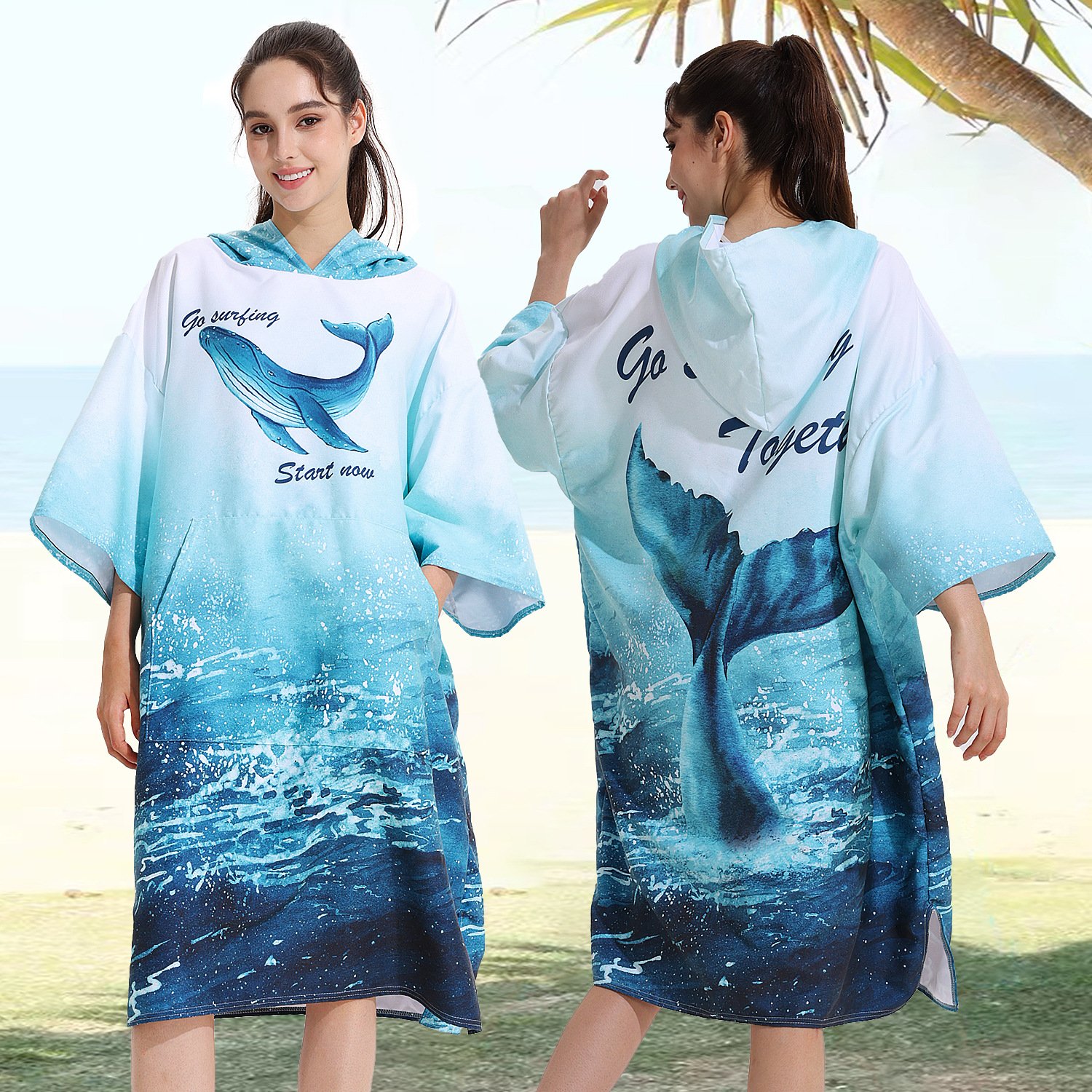
Quick Answer: What Is a Winter Surf Poncho?
에이 winter surf poncho is a thick, hooded changing robe designed specifically for cold-water surfers. Unlike regular beach towels, it features insulated fabrics (300-400 GSM), sewn sides, and windproof materials that keep you warm while changing out of your wetsuit. Therefore, it protects you from wind chill and provides privacy in harsh winter conditions.
Winter Surf Poncho vs Surf Changing Robe vs Beach Towel: Quick Comparison
| 특징 | Winter Surf Poncho | Standard Changing Robe | Classic Beach Towel |
|---|---|---|---|
| 따뜻함 | Thick insulation, fleece lining | Medium warmth | Minimal warmth |
| 바람 보호 | Windproof/waterproof shell | Some protection | None |
| 은둔 | Full coverage with hood | Good coverage | Limited |
| 최고의 대상 | Cold water surfing (below 15°C) | Year-round use | Summer beach days |
| 무게 | Heavy (400+ GSM) | Medium (250-350 GSM) | Light (150-250 GSM) |
Surf Poncho Market Growth: Why Demand Is Exploding
Interestingly, the surf poncho market is experiencing rapid growth worldwide. Moreover, one European brand sold over 60,000 surf ponchos in 2024 alone, expanding their product line to about 60 different models. Additionally, the global poncho market reached approximately $5.2 billion USD in 2025, with forecasts showing 4.9% annual growth through 2033.
| 미터법 | 데이터 포인트 |
|---|---|
| Surf ponchos sold by one EU brand (2024) | 60,000+ units |
| Number of surf poncho models (same brand) | About 60 models |
| Global rain poncho market value (2025) | $5.2 billion USD |
| Rain poncho market CAGR 2025-2033 | 4.9% annual growth |
| Annual poncho volume (top 10 firms) | 100+ million units per year |
Furthermore, surfing participation continues to grow globally. In Australia, surfing grew by 24% annually during the 2000s, while the USA saw a 28% increase between 2019 and 2020. Consequently, more surfers are staying in the water year-round, including during winter months, which drives demand for specialized cold water surfing gear like warm surf poncho towels.
What Is a Winter Surf Poncho? (Quick Answer)
Simply put, a winter surf poncho is a hooded changing robe made with thicker, more insulating fabrics compared to regular beach towels. Typically, these ponchos feature 300-400 GSM cotton, fleece, or insulated linings that keep surfers warm and covered when changing in cold and windy conditions.
Unlike a flat towel, it has sewn sides, a hood, and generous length. Therefore, you can change out of a wetsuit in complete privacy while staying protected from wind chill and cold air. Additionally, many winter models include pockets, zippers, and waterproof outer shells for extra functionality.
Key Point: Winter surf ponchos are specifically designed for cold water surfing gear needs, offering warmth, wind protection, and privacy that regular towels simply cannot provide.
How Cold Is “Cold Water Surfing”? Understanding the Challenge
Before diving into poncho features, it’s important to understand what “cold water” actually means. Generally speaking, cold-water surfing refers to water temperatures below 15°C (59°F). However, many winter-surf regions experience temperatures closer to 5-12°C (41-54°F) during peak season, especially in northern Europe and parts of North America.
Water Temperature Guide
- Warm water: 21°C+ (70°F+) – boardshorts or spring suit
- Moderate water: 15-21°C (59-70°F) – 3/2mm wetsuit
- Cold water: 10-15°C (50-59°F) – 4/3mm to 5/4mm wetsuit
- Very cold water: Below 10°C (50°F) – 6/5mm wetsuit plus boots, gloves, hood
Heat Loss Facts
At these temperatures, heat loss happens rapidly once you exit the water. In fact, research on cold-water immersion shows that cold exposure significantly reduces physical performance. Moreover, your body loses heat 25 times faster in cold water compared to cold air.
Therefore, surfers rely on thick wetsuits during sessions. However, equally important is what happens between sessions—this is where a quality warm surf poncho towel becomes essential.
Why Warmth Matters for Performance
Interestingly, a 2024 sports science study on surfers showed that core body temperature and performance are highly affected by cold conditions. Additionally, the research found that warm-up plus passive heating improved early wave performance compared with no warm-up.
“Cold water significantly reduces performance, while warm-up and passive warmth help maintain core temperature and keep surfers performing at their best.”
Consequently, keeping warm before and after sessions with thick ponchos helps surfers stay comfortable, recover faster, and ultimately surf longer throughout the winter season.
Winter Surf Poncho vs Surf Changing Robe vs Beach Towel
Now that we understand the cold-water challenge, let’s explore the differences between these three options in more detail.
Winter Surf Poncho
Specifically designed for harsh conditions, winter surf ponchos are usually thicker and sometimes waterproof. Furthermore, they’re engineered for maximum wind protection and warmth retention. Most models feature high-GSM fabrics, deep hoods, and extended lengths that provide coverage from shoulders to knees.
Standard Surf Changing Poncho
In contrast, standard surf changing ponchos use medium-weight cotton or microfiber materials. While they’re good for all-season changing, they offer less insulation in true winter conditions. Nevertheless, they work well for spring, summer, and fall surfing in moderate climates.
Classic Beach Towel
Finally, classic 비치 타월 are flat, have no sides or hood, and are lighter and cheaper. However, they offer minimal protection from wind and no privacy for changing. Therefore, they’re best suited for warm summer days rather than cold-water surfing.
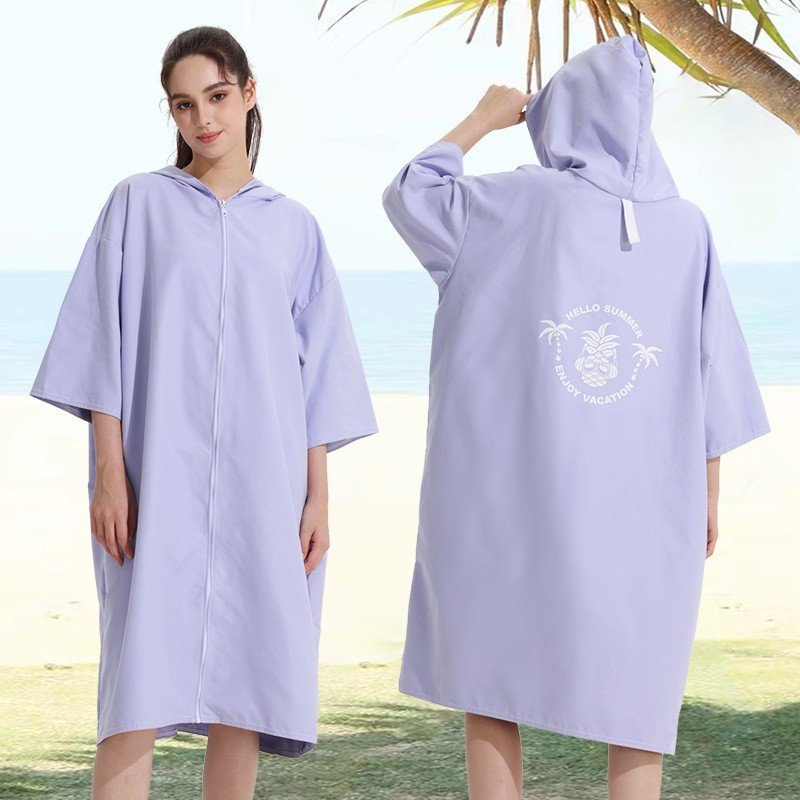
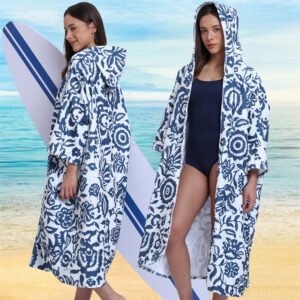
Winter surf poncho with deep hood for maximum warmth
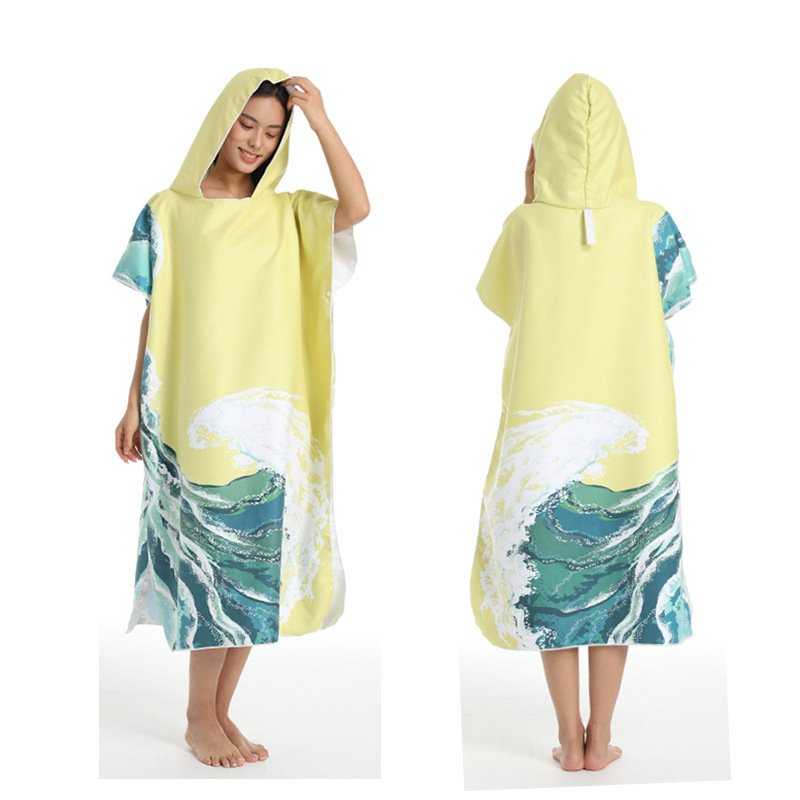
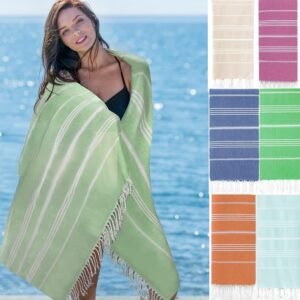
Warm surf poncho towel perfect for post-session warmth
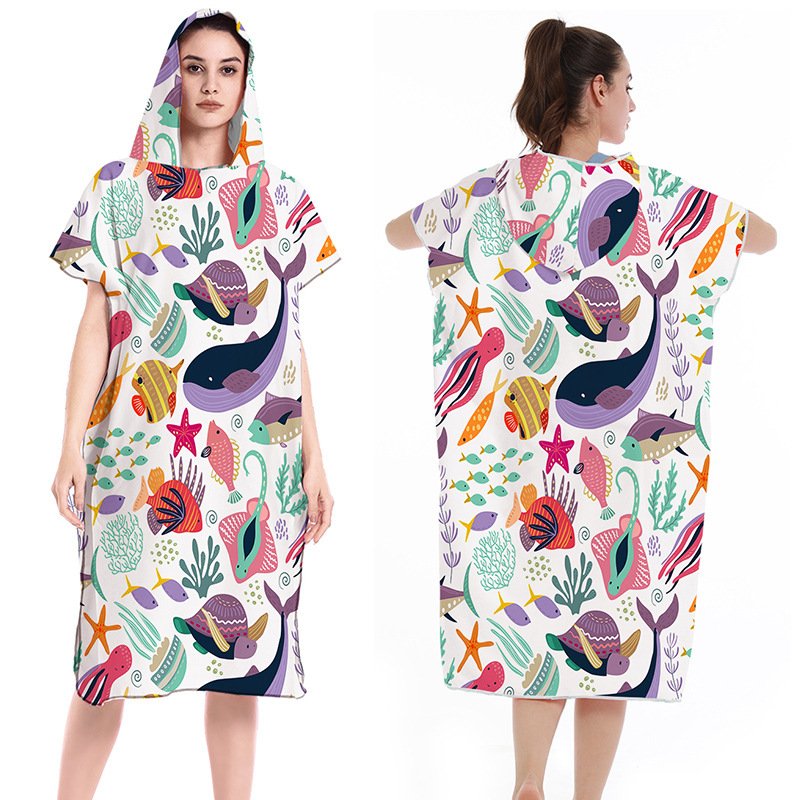
Surf changing robe with convenient front pockets
Key Features of a Warm Surf Poncho Towel
When shopping for a winter surf poncho, several important features determine how warm and comfortable you’ll be. Let’s break down each key element.
Fabric Weight (GSM Explained Simply)
GSM은 “평방 미터당 그램,” which measures fabric thickness and density. Generally speaking, higher GSM means thicker, warmer, and more absorbent material. For winter surf ponchos, look for fabrics between 350-450 GSM. In comparison, regular beach towels typically range from 150-250 GSM.
Moreover, premium winter models often combine high-GSM terry cloth with fleece linings for extra warmth. For example, microfiber options might have slightly lower GSM but compensate with quick-dry technology.
Hood and Coverage
A deep, well-designed hood is crucial for winter surf ponchos. Since up to 30% of body heat escapes through your head, a quality hood helps trap warmth and protect wet hair from cold wind. Additionally, look for hoods with drawcords that allow you to tighten the fit around your face during particularly windy conditions.
Furthermore, length matters significantly. Most winter ponchos extend to at least knee-length, providing full coverage while you change. Consequently, this generous length offers both warmth and privacy.
Pockets and Zippers
Practical features make a big difference in cold conditions. Specifically, look for:
- Kangaroo pockets: Large front pockets warm your hands and store car keys, phone, or wax
- Two-way zippers: Allow easy on/off and ventilation options
- Side slits: Provide wider arm openings for easier changing
- Lined pockets: Extra fleece lining keeps hands extra warm
Lining Options
The interior lining determines how warm and comfortable your poncho feels against your skin. Common lining options include:
- Cotton terry: Soft, highly absorbent, comfortable directly on skin
- Fleece: Maximum warmth retention, feels cozy and plush
- 극세사: Lightweight, fast-drying, compact for travel
- Dual-layer: Combines absorbent inner terry with insulating fleece middle layer
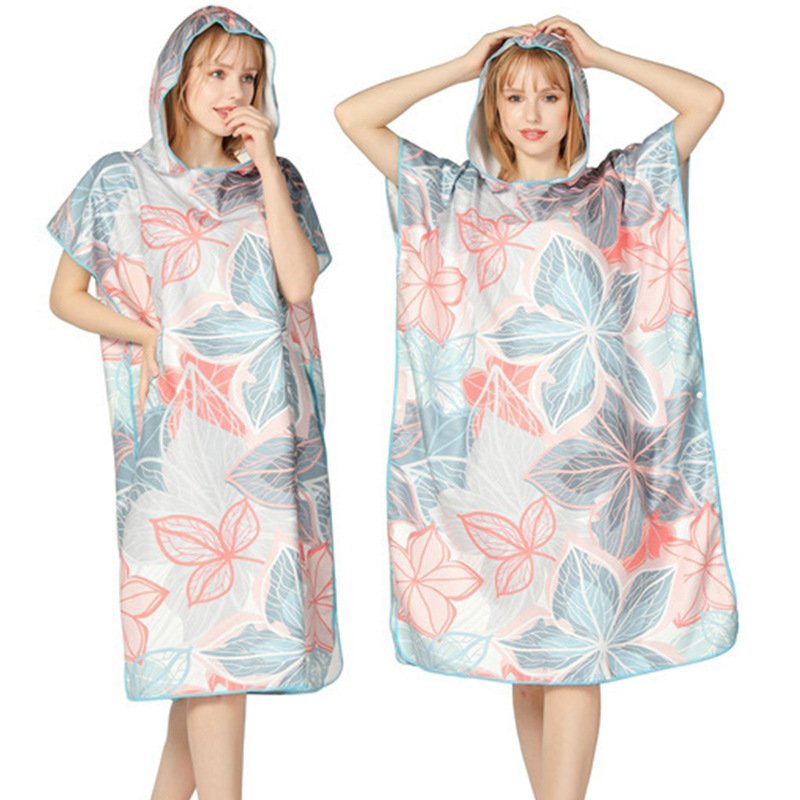
Custom surf poncho towel with branded logo options
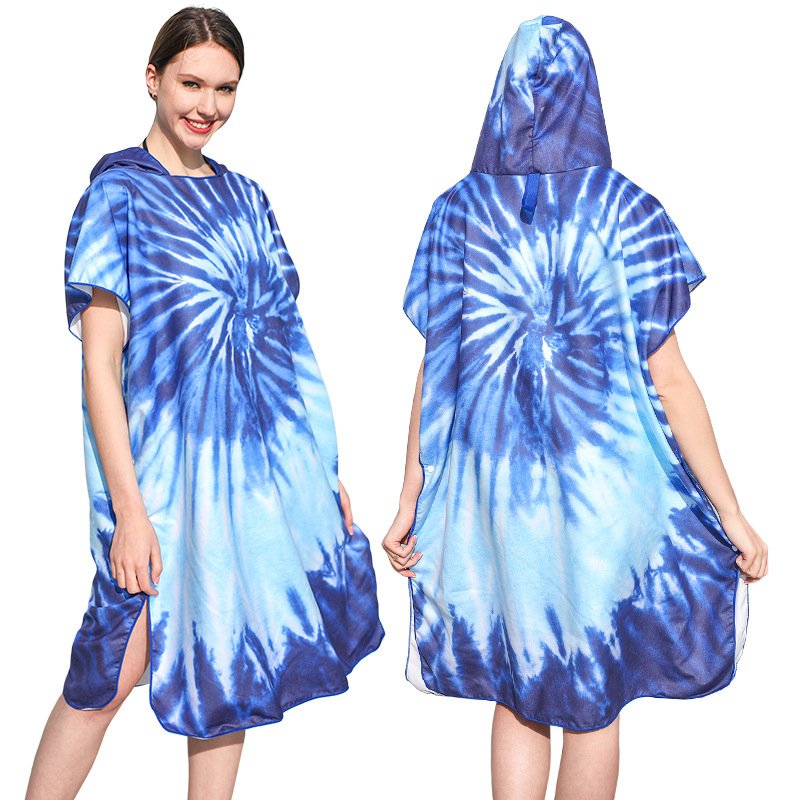
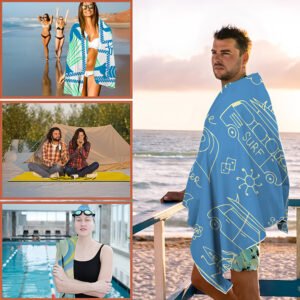
Essential cold water surfing gear including warm poncho
Best Materials for Winter Surf Ponchos
Choosing the right material significantly impacts your comfort during cold-water sessions. Let’s examine the pros and cons of each popular fabric option.
Cotton Terry (Pros & Cons)
장점:
- Extremely soft and comfortable against skin
- High absorbency pulls moisture away quickly
- Natural, breathable fabric feels less synthetic
- Durable and long-lasting with proper care
단점:
- Heavier when fully wet
- Takes longer to dry compared to microfiber
- Bulkier for packing and travel
Overall, 코튼 테리 판초 work best for surfers who prioritize comfort and warmth over portability.
Microfiber (Pros & Cons)
장점:
- Lightweight and compact for travel
- Dries extremely fast (50-70% faster than cotton)
- Less prone to mildew and odors
- Often more affordable than premium cotton
단점:
- Can feel less soft than high-quality cotton
- May retain odors over time without proper washing
- Less warm than thick cotton terry or fleece
Consequently, microfiber works well for shoulder seasons or surfers who travel frequently and need packable gear.
Fleece and Insulated Linings
장점:
- Maximum warmth and comfort for true winter
- Feels cozy and plush against skin
- Often combined with woven outer shell for wind protection
- Excellent heat retention even in extreme cold
단점:
- Heaviest and bulkiest option
- Takes longest to dry completely
- Higher price point than single-layer options
Therefore, fleece-lined ponchos are ideal for dedicated winter surfers in very cold regions.
Recycled and Eco-Friendly Fabrics
Increasingly, many brands are experimenting with recycled fibers to match sustainability trends in surf apparel. For instance, recycled polyester and cotton blends offer similar performance while reducing environmental impact. Moreover, eco-conscious surfers appreciate options that align with ocean conservation values.
~에 chinatowelmanufacturer.com, we offer sustainable fabric options for custom orders, including OEKO-TEX certified materials that meet strict environmental and safety standards.
Waterproof vs Non-Waterproof: Which Winter Poncho Is Better?
One important decision is whether to choose a waterproof or non-waterproof winter surf poncho. Each option has distinct advantages depending on your specific conditions.
Waterproof Outer Shell Ponchos
Waterproof models feature a woven outer shell that blocks wind and rain. This design helps significantly in stormy parking lots or very windy beach breaks. Additionally, the shell prevents water from soaking through to the insulated lining.
Best for:
- Rainy or stormy surf sessions
- Extremely windy coastal areas
- Northern climates with wet winter weather
- Surfers who walk long distances from car to beach
However, waterproof shells can feel hotter during use and typically take longer to dry completely. Furthermore, they’re usually heavier and more expensive than non-waterproof options.
Non-Waterproof, Fully Towel-Style Ponchos
In contrast, non-waterproof ponchos are made entirely from absorbent terry or fleece materials. These designs are more breathable and lighter, which makes them better for mild climates or less extreme conditions.
Best for:
- Dry, cold winter days
- Milder coastal climates
- Surfers who change quickly near their vehicle
- Those who prioritize breathability and comfort
Ultimately, consider your local climate and typical surf conditions when making this choice. Many serious winter surfers actually own both types for different weather scenarios.
Complete Cold-Water Surfing Gear Checklist
A winter surf poncho is just one piece of your cold water surfing gear setup. Here’s a complete checklist to ensure you’re fully prepared for cold sessions:
In-Water Gear
- 4/3mm to 6/5mm wetsuit (thickness depends on your region)
- Neoprene boots (5mm-7mm for water below 12-14°C)
- Neoprene gloves (3mm-5mm depending on temperature)
- Neoprene hood (essential for water below 10°C)
- Wetsuit lubricant (reduces chafing on neck and wrists)
Before and After Session Gear
- Winter surf poncho or insulated changing robe (pre- and post-session warmth)
- Thermos with hot drink (tea, coffee, or hot chocolate)
- Warm beanie or wool hat
- Dry base layers (thermal underwear for after surfing)
- Thick socks and warm shoes
- Changing mat or 모래가 없는 비치 타월 (keeps feet clean and dry)
- Plastic bag or wet bag (for storing wet wetsuit)
Optional But Helpful Items
- Portable shower or water jug for rinsing
- Hot water bottle to place inside poncho
- Windproof changing tent or shelter
- Hand warmers or chemical heat packs
전문가 팁: Your warm surf poncho towel serves as the key transition item between water and land in this checklist. It’s often the single most important piece of post-session gear for maintaining body heat.
How Much Warmer Does a Surf Poncho Keep You?
Many surfers wonder about the actual warmth performance of winter surf ponchos. While specific temperature values vary by fabric and wind conditions, scientific research provides helpful insights.
As mentioned earlier, sports science data shows that warm-up and passive heating help maintain core temperature and improve early wave performance compared with no warm-up. Specifically, surfers who used warming gear between sessions maintained better body temperature and performed significantly better on their first waves.
Additionally, research on cold-water immersion demonstrates that insulating layers reduce heat loss substantially. Thick lined ponchos create a barrier against wind chill, which makes it easier for your body to recover its normal temperature after leaving cold water.
“In practical terms, a quality winter poncho can help you feel comfortable within 5-10 minutes after exiting cold water, compared to 20-30 minutes without one.”
Furthermore, the combination of absorbent inner layers and windproof outer shells stops the evaporative cooling effect that makes you feel freezing after surfing. Therefore, investing in a proper warm surf poncho towel directly impacts how long and how often you can surf throughout winter.
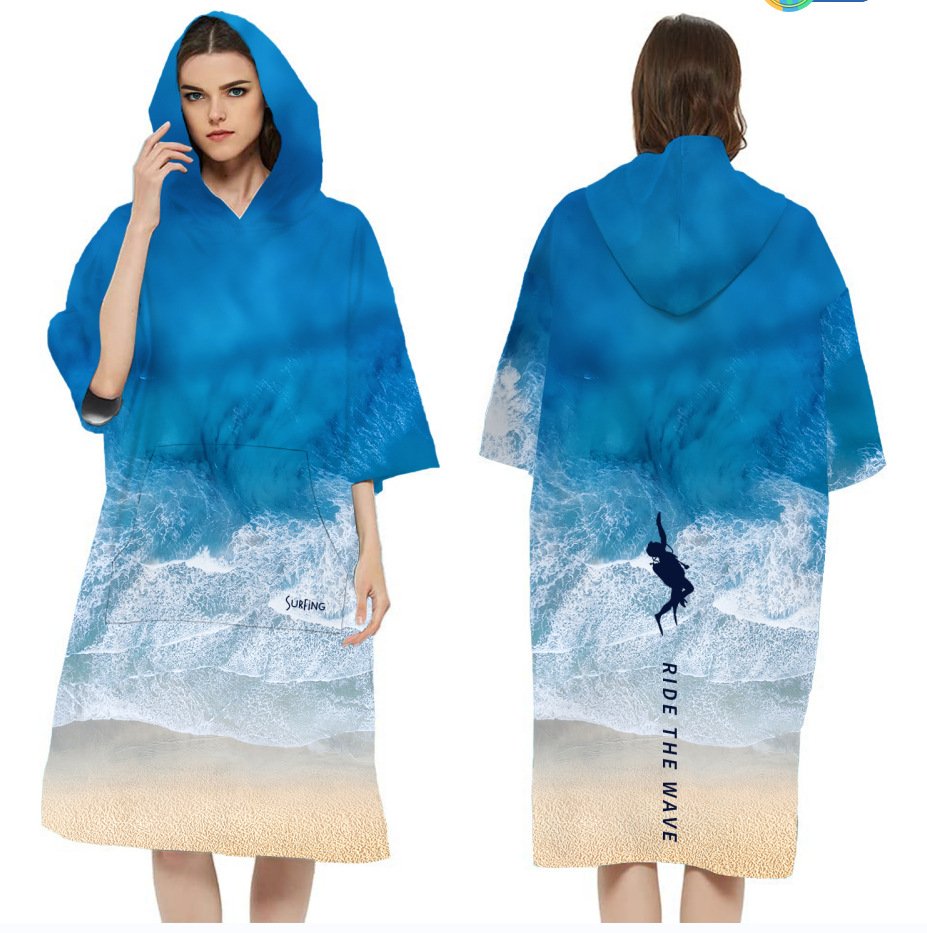
Winter surf poncho providing essential post-session warmth
Size and Fit Guide for Winter Surf Ponchos
Getting the right size ensures maximum comfort and functionality from your winter surf poncho. Let’s explore sizing options across different user groups.
Unisex vs Dedicated Sizing
Most winter ponchos use oversized, unisex designs that fit comfortably over thick wetsuits. This generous sizing allows surfers to pull the poncho over their head while still wearing their wetsuit, then change underneath in complete privacy.
Typically, adult sizes feature:
- One-size-fits-most: Usually fits adults 5’2″ to 6’4″ (160-195 cm)
- 길이: 80-100 cm from shoulder to hem (reaches mid-thigh to knee)
- 너비: 65-80 cm across shoulders for easy arm movement
However, some brands offer separate men’s and women’s cuts. Women’s models often feature slightly narrower shoulders and longer length for better coverage, while maintaining the roomy fit needed for changing.
어린이’ Winter Ponchos
For young surfers, dedicated kids’ sizes ensure proper coverage without excess fabric. Generally, kids’ ponchos come in two size ranges:
- Small (ages 4-8): Length 60-70 cm
- Medium/Large (ages 8-14): Length 70-80 cm
As a result, families can outfit everyone with matching ponchos sized appropriately for each member. This is particularly popular with custom surf poncho towel orders for surf schools and family surf camps.
How to Measure
To ensure the best fit, measure from your shoulder point down to where you want coverage (typically mid-thigh or knee). Additionally, check the poncho’s width across the chest—you want at least 10-15 cm of extra room beyond your shoulder width for comfortable arm movement while changing.
Pro sizing tip: When in doubt, go larger rather than smaller. A slightly oversized poncho provides better coverage and makes changing easier, while a too-small poncho defeats the purpose.
Design Details That Actually Matter in Winter
Beyond basic features, several design details separate average winter surf ponchos from exceptional ones. Pay attention to these elements when shopping:
- Two-way zippers for easy on/off and ventilation: Allow you to unzip from bottom or top, making it easier to get in and out without removing the poncho entirely. Furthermore, you can partially unzip for temperature control.
- Side slits or wide arm openings for easier changing: Strategically placed openings let you move your arms freely while changing underneath, without exposing your body to cold wind.
- Lined pockets to warm hands and store accessories: Fleece-lined kangaroo pockets provide a warm spot for cold hands between sets, plus safe storage for car keys, phone, and surf wax.
- Deep hood with drawcord to reduce heat loss from the head: An adjustable hood that fits snugly around your face prevents warm air from escaping and blocks cold wind effectively.
- Reinforced seams and double-stitching: Ensures durability even with regular use in harsh beach conditions and frequent washing.
- Interior hanging loop: Makes it easy to hang your poncho to dry in your vehicle or at home.
- Contrasting color lining: Not just aesthetic—helps you quickly identify inside from outside when changing in a rush or low light.
- Extended back length: Some models feature extra length in the back for better coverage when bending over to remove wetsuit booties.
Important Note: These seemingly small details make a significant difference in real-world winter conditions. Therefore, compare these features carefully when choosing between different models.
Travel-Friendly Winter Ponchos for Vanlife and Road Trips
For surf travelers, vanlife enthusiasts, and road-trippers, portability becomes an important consideration. Fortunately, several winter poncho options balance warmth with travel-friendly features.
Packability Factors
Microfiber or mid-weight cotton ponchos pack considerably smaller than heavy fleece-lined models. Specifically, a microfiber poncho can compress to about 30-40% of its full size, while thick cotton terry maintains most of its volume even when folded.
Additionally, some brands include compression bags or stuff sacks with their ponchos, making them easier to pack in surf travel bags or vehicle storage.
Multi-Purpose Travel Benefits
Beyond changing, winter surf ponchos serve multiple purposes during surf trips:
- Blanket or sleeping bag liner: Extra warmth on cold nights in vans or tents
- Beach picnic blanket: Clean, dry surface for meals or relaxing
- Emergency rain cover: Protection during unexpected showers
- Pillow or cushion: Fold it up for comfortable seating or head support
- Privacy screen: Hang it to create a changing area in open spaces
Consequently, surf travel brands increasingly describe changing ponchos as lightweight, packable essentials that double as versatile camp gear. In fact, many surf travel packing guides now list changing ponchos as must-have items.
Best Options for Travelers
For maximum travel-friendliness while maintaining winter warmth, consider:
- Microfiber ponchos with fleece accent panels (warmth without full bulk)
- Medium-weight cotton (300 GSM) with windproof shell overlay
- Hybrid designs with removable fleece linings
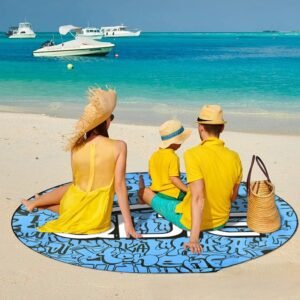
- Round towel ponchos that serve dual purposes
How to Care for Your Winter Surf Poncho Towel
Proper care extends the life of your winter surf poncho and maintains its warmth and absorbency. Follow these washing and drying tips for best results.
Washing Tips
First and foremost, always rinse your poncho with fresh water after each use, especially after ocean sessions. Salt water can degrade fabrics over time and reduce absorbency. Simply rinse thoroughly in the shower or with a hose.
For machine washing:
- Use cold or warm water (not hot) to prevent shrinkage and color fading
- Choose mild, liquid detergent rather than powder, which can leave residue
- Avoid fabric softeners that coat fibers and reduce water absorption
- Wash separately or with similar colors to prevent color bleeding
- Use gentle cycle to protect seams and stitching
- Don’t overload the machine—ponchos need room to agitate properly
건조 팁
Drying method significantly affects longevity, especially for printed or embroidered custom ponchos:
- Line-dry in shade when possible to protect colors and logos from UV damage
- Hang on a thick rod or clothesline to prevent stretching
- Shake out before hanging to restore loft and softness
- If using a dryer, use low heat only and remove while slightly damp
- Avoid direct sunlight for extended periods which can fade darker colors
Storage and Longevity Advice
Between surf seasons, store your poncho properly to maintain quality:
- Ensure it’s completely dry before storing to prevent mildew
- Fold loosely rather than tight compression
- Store in a breathable bag, not sealed plastic
- Keep in a cool, dry place away from direct heat sources
Moreover, inspect seams and stitching periodically for any wear. Small repairs done early prevent bigger problems later. With proper care, a quality winter surf poncho should last 3-5 years of regular use.
Special Note: For custom branded ponchos used in surf schools or rental programs, following these care instructions ensures your investment maintains its professional appearance season after season.
Custom Winter Surf Poncho Towels for Surf Shops, Schools and Outdoor Brands
Increasingly, surf schools, surf shops, and outdoor brands add custom-logo ponchos and changing robes to their merchandise lines. This trend makes sense for several compelling reasons.
Why Brands Choose Custom Ponchos
Custom surf ponchos serve as high-margin, functional items that customers use every session. Unlike t-shirts that get worn occasionally, a quality poncho becomes an essential piece of gear that surfers reach for repeatedly throughout winter.
Furthermore, branded ponchos offer excellent marketing visibility. When students wear your surf school’s poncho at the beach, they become walking advertisements. Similarly, surf shop customers who purchase branded ponchos effectively promote your business every time they go surfing.
Customization Options
Modern manufacturing allows extensive personalization for 맞춤형 서핑 판초 타월:
- Logo placement: Front chest, back, hood, or pocket positions
- Printing methods: Screen printing, embroidery, sublimation, or heat transfer
- Color choices: Full custom color matching to brand guidelines
- Size ranges: Adult and kids’ sizes with same branding
- Fabric selection: Cotton, microfiber, fleece, or blended options
- Custom labels and tags: Interior woven labels with care instructions
- Unique design elements: Custom hood linings, contrast stitching, branded drawcords
Market Data Supporting Custom Ponchos
Remember the market data we shared earlier? One European brand sold over 60,000 surf ponchos in 2024, expanding to approximately 60 different models for various uses. This demonstrates strong market demand and the viability of custom poncho programs.
Additionally, with surfing participation growing 24% annually in Australia and 28% from 2019-2020 in the USA, the customer base for surf accessories continues expanding rapidly. Therefore, offering quality custom ponchos positions your brand to capitalize on this growth.
Ideal Customers for Custom Programs
- Surf schools: Branded gear for students plus rental income opportunities
- Surf shops: High-margin retail merchandise with repeat purchase potential
- Surf competitions and events: Participant gifts or sponsor branding
- Corporate team building programs: Branded gear for surf retreats
- Beach resorts and hotels: Luxury amenity items for guests
- Environmental organizations: Fundraising merchandise with eco-friendly fabrics
How to Choose a Reliable China Surf Poncho Manufacturer
When sourcing custom winter surf ponchos, selecting the right manufacturing partner determines your product quality, delivery reliability, and overall success. Here’s what to look for in a China surf poncho manufacturer.
Experience Producing Surf Ponchos for EU/US Markets
First, verify that the manufacturer has proven experience producing surf ponchos and changing robes specifically for European and US markets. These markets have high quality expectations and specific sizing preferences. Look for manufacturers who can show previous work samples and client references from Western brands.
예를 들어, (주)페이버하우스웨어 has 15 years of experience manufacturing beach towels and surf changing ponchos for international markets, with an established track record serving global customers.
Stable GSM and Fabric Quality
Quality consistency matters tremendously for repeat orders. Your manufacturer should maintain stable GSM measurements, colorfastness, and tested shrinkage rates across production runs. Ask potential manufacturers about:
- Quality control processes for fabric inspection
- Testing procedures for colorfastness (ISO standards)
- Shrinkage testing protocols before cutting
- Yarn quality specifications and suppliers
Additionally, reputable manufacturers use high-quality yarn and imported weaving machines to ensure consistent fabric quality. At chinatowelmanufacturer.com, we implement strict quality inspection at every stage from raw materials to final packing.
Sustainable Fabrics and Recycled Content Options
Modern surf brands increasingly prioritize sustainability. Therefore, your manufacturer should offer options for:
- Recycled polyester and cotton blends
- OEKO-TEX certified fabrics (free from harmful chemicals)
- Organic cotton options
- Water-saving dyeing processes
- Reduced plastic packaging alternatives
Furthermore, look for manufacturers with environmental certifications like BSCI (Business Social Compliance Initiative), which ensures ethical and sustainable production practices.
Custom Pattern, Embroidery, and Printing Capabilities
Your manufacturer should manage multiple customization methods professionally:
- Digital printing: Ideally with no minimum order quantity for maximum design flexibility
- Embroidery: For premium, long-lasting logo application
- Sublimation: For full-color, all-over designs
- Screen printing: Cost-effective for larger runs with solid colors
At Favor Houseware, we offer digital printing with 인쇄를 위한 MOQ 없음, which gives brands incredible flexibility to test designs or create limited-edition runs. Our automatic sewing machines ensure consistent stitching quality even on embroidered logos.
Clear Communication on Lead Time, Sampling, and Shipping
Professional manufacturers provide transparent information about:
- Sample development time: Usually 5-7 days for initial samples
- Production lead time: Typically 20-30 days depending on order size
- Minimum order quantities: Look for flexible MOQs (100-500 pieces)
- Shipping options: Air freight for urgent orders, sea freight for cost savings
- Payment terms: Clear terms with secure payment options
Additionally, manufacturers should offer free samples (you pay only freight costs) so you can verify quality before placing large orders. This demonstrates confidence in their product quality.
Quality Certifications and Standards
Reputable manufacturers maintain important certifications:
- BSCI: Ethical manufacturing and worker welfare standards
- OEKO-TEX 표준 100: Textiles tested for harmful substances
- SGS certification: Independent quality and safety verification
- FDA compliance: For products potentially used by children
These certifications aren’t just paperwork—they represent genuine commitment to quality and safety. At chinatowelmanufacturer.com, we maintain all these certifications and can provide documentation upon request.
Factory Location and Logistics
Consider the manufacturer’s location relative to shipping ports and materials suppliers. For instance, Favor Houseware operates from Yiwu, Jinhua, Zhejiang Province, China—a region known for textile manufacturing with excellent logistics infrastructure. This location ensures:
- Access to quality fabric suppliers
- Proximity to major shipping ports (Shanghai, Ningbo)
- Competitive shipping rates
- Fast domestic material sourcing
Choosing the Right Partner
Ultimately, the best manufacturer combines quality products, reasonable pricing, flexible customization, and reliable communication. Before committing to large orders, request samples, ask detailed questions about processes, and verify certifications.
Ready to start your custom surf poncho project? Favor Houseware at chinatowelmanufacturer.com offers comprehensive customization, quality assurance, sustainable production, low MOQ (starting from 100 pieces), and excellent customer service backed by 15 years of international manufacturing experience. 오늘 저희에게 연락하세요 for free samples and a detailed quote.
Winter Surf Poncho FAQ (People Also Ask)
Is a winter surf poncho worth it for cold-water surfing?
Absolutely yes. In cold and windy conditions, a thick surf poncho or insulated changing robe helps reduce heat loss significantly after leaving the water. Moreover, it lets surfers warm up faster and change out of wetsuits in comfort and complete privacy. Given that cold water reduces physical performance, maintaining warmth between sessions directly improves your overall surf experience.
What should I look for in a warm surf poncho towel?
Look for high-GSM terry or fleece lining (350-450 GSM) for optimal warmth, a windproof or waterproof outer shell to block cold wind, a deep hood with drawcord to protect your head, generous length for full coverage (reaching at least to knees), and practical features like pockets or zips that make changing easier in cold weather. Additionally, check the quality of stitching and seams for durability.
What is the difference between a surf changing robe and a normal towel?
에이 surf changing robe has sewn sides, arm openings, and a hood so you can change clothes discreetly while staying protected from wind and rain. In contrast, a normal towel is flat and offers little privacy or wind protection. Furthermore, changing robes are designed specifically for standing and moving while changing, whereas flat towels require you to wrap and hold them, which is difficult in windy conditions.
Can I use a winter surf poncho instead of a jacket?
For short periods around the car park, campsite, or beach, many surfers wear their insulated poncho like a coat because it provides excellent warmth and covers wet gear. However, it’s not designed to fully replace a technical winter jacket in heavy rain, snow, or for extended outdoor activities. Think of it as specialized gear for the transition period immediately before and after surfing.
What size winter surf poncho do I need?
Most ponchos use oversized, one-size-fits-most designs for adults, typically fitting people from 5’2″ to 6’4″ (160-195 cm) comfortably. They’re designed to fit over wetsuits with room to move. Check that the length reaches at least your knees for full coverage while changing. When in doubt, choose the larger size—slightly oversized is better than too tight for this type of gear.
What is the best material for a winter surf poncho?
For true winter conditions, thick cotton terry or fleece lining combined with a windproof or waterproof shell offers the best balance of warmth, absorbency, and wind protection. However, microfiber is lighter and better for travel or milder climates. The “최상의” material ultimately depends on your specific climate, travel needs, and personal preferences regarding weight versus warmth.
How do you wash and dry a surf poncho towel?
Rinse with fresh water after each use, then machine wash on gentle cycle with mild liquid detergent in cold or warm water. Importantly, avoid heavy fabric softeners that reduce absorbency. Line-dry in the shade when possible to protect colors and printed logos, or tumble dry on low heat only. Never use hot water or high heat, as these can cause shrinkage and damage printed designs.
Can I customize surf ponchos with my surf shop or school logo?
Yes, definitely! Many manufacturers offer custom surf ponchos with printed or embroidered logos, custom colors, and personalized label designs. This makes them popular merchandise items and rental equipment for surf schools and outdoor brands. Look for manufacturers that offer flexible MOQs and multiple customization methods (printing, embroidery, sublimation) to match your specific branding needs.
What other gear do I need for cold-water surfing?
Alongside a winter surf poncho, you should have a suitable thick wetsuit (4/3mm to 6/5mm depending on water temperature), neoprene boots for insulation and reef protection, neoprene gloves and hood for water below 12-14°C, and warm clothes for after your session. Additionally, bring a thermos with a hot drink, dry base layers, and a changing mat to protect against the performance-reducing effects of cold exposure.
Are winter surf ponchos only for surfers?
No, not at all! Changing ponchos are also widely used by open-water swimmers, triathletes, SUP (stand-up paddleboard) riders, kayakers, and campers. Basically, anyone who needs to change clothes outdoors while staying warm and covered benefits from this versatile gear. In fact, many outdoor enthusiasts keep one in their vehicle year-round for unexpected situations requiring quick clothing changes.
Conclusion: Stay Warm and Surf Longer This Winter
Winter surfing offers uncrowded waves, pristine conditions, and some of the best swells of the year. However, staying comfortable in cold conditions requires the right gear—and a quality winter surf poncho sits at the heart of your cold-water setup.
As we’ve explored throughout this guide, the best warm surf poncho towels combine high-GSM fabrics, thoughtful design features, and durable construction to keep you warm between sessions. Whether you choose cotton terry for maximum comfort, microfiber for travel-friendly performance, or fleece-lined models for extreme cold, investing in proper cold water surfing gear directly impacts how often and how long you can surf throughout winter.
Furthermore, the growing surf poncho market—with brands selling 60,000+ units annually and the wider poncho market valued at $5.2 billion—demonstrates that surfers worldwide recognize the value of quality changing gear. As surfing participation continues growing at 20-28% annually, more people are discovering that the right equipment makes winter sessions not just bearable, but genuinely enjoyable.
For surf shops, schools, and outdoor brands, 맞춤형 서핑 판초 타월 represent an excellent opportunity to offer functional, high-margin merchandise that customers actually use and value. With flexible manufacturing options, low minimum order quantities, and extensive customization capabilities, creating your own branded poncho line has never been more accessible.
Ready to Upgrade Your Winter Surf Game?
Whether you’re shopping for your first winter poncho or sourcing custom products for your business, choosing a reliable manufacturer makes all the difference. (주)페이버하우스웨어 at chinatowelmanufacturer.com brings 15 years of textile manufacturing excellence to every surf poncho we produce.
Why choose us for your winter surf ponchos?
- ✅ Comprehensive customization with no MOQ for digital printing
- ✅ Premium materials including OEKO-TEX certified sustainable fabrics
- ✅ Quality certifications (BSCI, OEKO-TEX 100, SGS, FDA)
- ✅ Low minimum orders 단 100개부터 시작
- ✅ Fast turnaround with available stock for quick shipping
- ✅ 무료 샘플 available (pay freight only)
- ✅ 15 years experience serving international surf and beach brands
- ✅ Factory-direct pricing from our facility in Yiwu, Zhejiang Province
Get Your Custom Winter Surf Ponchos Today!
Whether you need one poncho for yourself or 10,000 for your brand, we’re ready to help. Contact Favor Houseware for free samples, detailed quotes, and expert guidance on creating the perfect winter surf poncho for your needs.
📧 Contact us today: chinatowelmanufacturer.com
📞 Get a quote within 24 hours
🌊 Join hundreds of satisfied brands worldwide who trust Favor Houseware for quality surf gear
Don’t let cold water keep you out of the ocean this winter. With the right surf changing robe or winter poncho, you’ll stay warm, comfortable, and ready for every session—no matter how low the temperature drops. Start your winter surf journey properly equipped, and discover why thousands of surfers worldwide consider a quality poncho their most essential piece of cold-water gear.
Stay warm, surf more, and make this your best winter surf season yet!
“`조회수: 1