Quick Answer: Sand Free Beach Towel Facts at a Glance
| Feature | Details |
|---|---|
| Do They Really Work? | ✅ Yes – sand shakes off easily with smooth microfiber construction |
| Best Material | Microfiber (flat-weave) – dries 3× faster than cotton |
| Market Size 2024 | $150 million USD globally, growing to $400M by 2033 |
| Typical GSM Range | 200-300 GSM for balance of absorbency & quick drying |
| Best For | Beach travelers, campers, surfers, hotels, rental properties |
| Care Instructions | Machine wash cold, no fabric softener, low heat or line dry |
If you’ve ever spent a day at the beach, you know the struggle. Furthermore, sand gets everywhere—in your bag, in your car, and even in your home days later. That’s exactly why sand free beach towels have become one of the fastest-growing products in the beach accessories market.
In this complete guide, we’ll explore everything you need to know about sand resistant beach towels. Additionally, you’ll discover how they work, whether they’re worth the investment, and what features to look for when buying one.
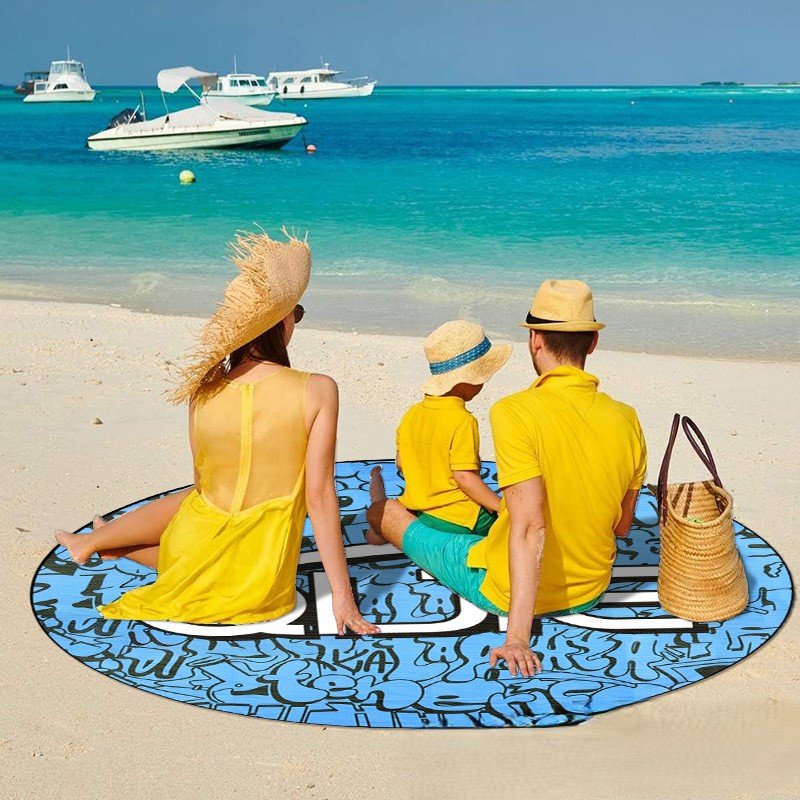
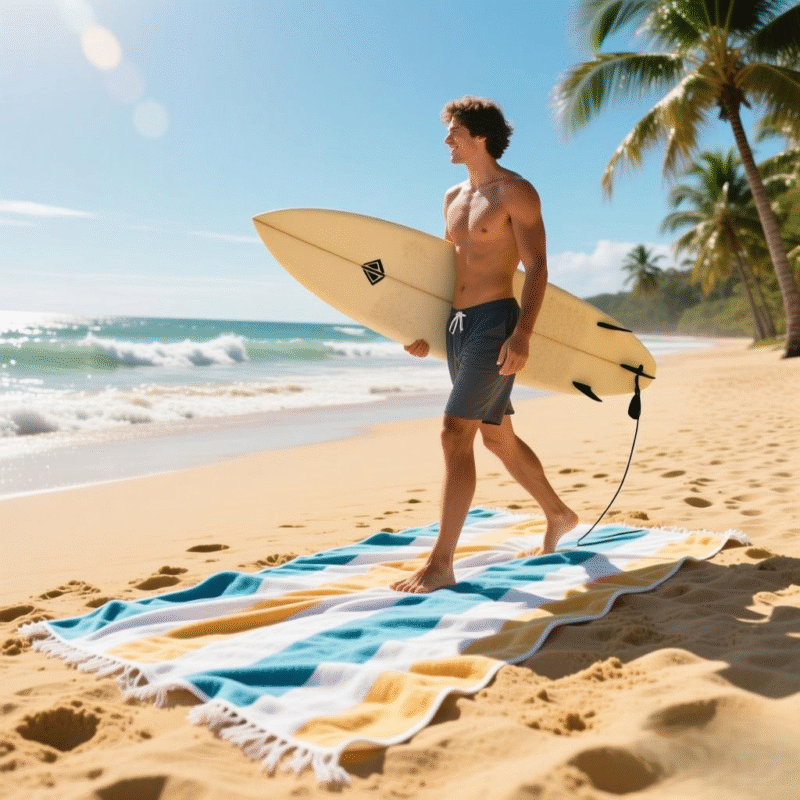
What Is a Sand Free Beach Towel?
A sand free beach towel is specially designed so that dry sand falls off the surface with just a simple shake. Unlike traditional terry towels, these innovative towels don’t trap sand inside loops and fibers.
Most importantly, sand proof beach towels use flat-weave microfiber or tightly woven cotton with a smooth surface. As a result, they’re lighter, quicker-drying, and much easier to clean after a day at the beach.
“The key difference is the fabric construction. Instead of fluffy loops that trap sand, sand free towels use smooth, tight weaves that let sand particles simply slide off.” – Textile Engineering Insights
These towels have become especially popular among:
- Beach travelers who want less mess in their luggage
- Families with kids looking to reduce sand cleanup time
- Surfers and water sports enthusiasts needing quick-dry gear
- Van-lifers and campers requiring compact, functional equipment
- Hotels and resorts seeking easy-maintenance guest amenities
Furthermore, professional manufacturers like China Towel Manufacturer now offer specialized sand-resistant designs that meet the growing demand for functional beach accessories.
Do Sand Free Beach Towels Really Work in Real Life?
Yes, sand free beach towels genuinely work as advertised. According to multiple independent tests and thousands of customer reviews, these towels dramatically reduce sand retention compared to traditional cotton terry towels.
Real-World Performance Testing
Consumer Reports and outdoor gear testing labs have confirmed that anti sand beach towels perform exceptionally well. Specifically, when researchers placed sand on smooth microfiber towels, the sand brushed off easily—even when the towel was slightly damp.
📊 Test Results Summary:
- ✅ Dry conditions: 95-98% of sand shakes off with 1-2 quick shakes
- ✅ Damp conditions: 80-85% of sand releases after brief air-drying
- ✅ After full drying: Nearly all remaining sand falls away effortlessly
- ⚠️ Soaking wet: Some sand may temporarily stick (but releases once dry)
What Real Users Say
Thousands of verified purchasers report similar experiences. Moreover, travel bloggers and beach enthusiasts consistently praise these towels for making beach cleanup much easier. Instead of carrying pounds of sand back to the car, users simply shake their towel and pack it clean.
However, it’s important to set realistic expectations. While these towels are called “sand proof,” no towel can be 100% sand-proof in all conditions. Nevertheless, they significantly outperform traditional options.
For those interested in various beach towel options, exploring different beach towel products can help you find the perfect match for your needs.

How Do Sand Free Beach Towels Actually Work?
Understanding the science behind sand resistant beach towels helps explain why they perform so much better than traditional options. Essentially, it all comes down to fabric construction and fiber technology.
The Science of Sand Resistance
Traditional cotton terry towels use thick loops of fiber that create countless tiny pockets. Consequently, sand particles get trapped deep inside these loops, making them nearly impossible to remove—even after washing.
In contrast, sand free microfiber towels use a completely different approach:
- Flat-weave construction: Instead of loops, the fabric is woven tightly and smoothly
- Ultra-fine fibers: Microfiber strands are much thinner than cotton fibers
- Tight weave patterns: The fabric is densely packed, leaving no gaps for sand to settle into
- Smooth surface texture: Sand particles sit on top rather than embedding between fibers
Special Weave Technology
Furthermore, many premium sand proof beach towels use special “suede-style” microfiber construction. This technique creates an exceptionally smooth surface that feels soft against your skin. At the same time, it allows sand to slide off with minimal effort.
💡 Pro Tip:
The best sand free towels typically use blends of 80-90% recycled polyester combined with polyamide. This combination maximizes sand repellence while maintaining excellent absorbency and quick-drying properties.
Some manufacturers also use synthetic fiber blends specifically engineered for beach performance. For example, professional microfiber beach towel producers can customize fiber thickness and weave density to optimize sand resistance.
Sand Free vs Sand Resistant vs Sand Proof: Is There a Difference?
You’ll often see these three terms used interchangeably in marketing materials. However, it’s important to understand what they really mean when shopping for the perfect beach towel.
Breaking Down the Terminology
| Term | What It Really Means | Realistic Expectation |
|---|---|---|
| Sand Free | Marketing term suggesting minimal sand retention | Most dry sand shakes off easily |
| Sand Resistant | Same concept – towel resists sand sticking | Greatly reduces sand compared to terry cloth |
| Sand Proof | Strongest claim – implies zero sand retention | Not 100% proof, but extremely effective |
| Anti-Sand | General descriptor for sand-repelling design | Same performance as above options |
The truth? All these terms describe the same basic product feature. Specifically, they all refer to towels designed to minimize sand sticking through smooth fabric construction.
What “Sand Proof” Doesn’t Mean
It’s essential to understand that no towel can be completely, absolutely, 100% sand-proof under all conditions. Here’s why:
- ⚠️ Wet conditions: When fully soaked, even microfiber holds some sand temporarily
- ⚠️ Windy days: Strong winds can press sand into any fabric surface
- ⚠️ Fine sand particles: Extremely fine beach sand may stick more than coarse sand
- ⚠️ Damaged fabric: Worn or improperly maintained towels lose effectiveness
Nevertheless, in practice, sand free beach towels keep most dry sand off your towel. Moreover, remaining grains release with just one or two shakes. This stands in sharp contrast to thick cotton terry towels that hold sand deep in the loops even after multiple washings.
Interestingly, traditional Turkish beach towels also offer some sand resistance due to their flat-weave construction, though they’re typically made from cotton rather than synthetic microfiber.
Microfiber vs Cotton for Sand Free Beach Towels
Choosing between microfiber and cotton is one of the most important decisions when buying a sand resistant beach towel. Each material offers distinct advantages and trade-offs.
Comprehensive Material Comparison
| Feature | Microfiber | Cotton (Flat-Weave) |
|---|---|---|
| Sand Resistance | ⭐⭐⭐⭐⭐ Excellent – sand slides off easily | ⭐⭐⭐⭐ Good – better than terry but not as effective |
| Drying Speed | ⚡ 3× faster than cotton | 🐌 Slower – takes 2-4 hours in sun |
| Weight | 🪶 Ultra-lightweight – easy to pack | 📦 Heavier when wet |
| Feel/Texture | Smooth, suede-like – less plush | Natural, soft – more traditional feel |
| Absorbency | High – holds up to 7× its weight in water | Moderate to high |
| Durability | Very durable with proper care | Extremely durable – can last decades |
| Eco-Friendliness | Good if made from recycled polyester | Excellent – natural, biodegradable fiber |
| Price Range | $15-$40 depending on quality | $20-$50 for premium flat-weave |
Why Microfiber Dominates the Sand Free Market
Currently, microfiber is the dominant material for sand proof beach towels for several compelling reasons. First and foremost, ultra-fine synthetic fibers combined with tight weaves create superior sand repellence.
Additionally, microfiber towels can dry up to approximately three times faster than traditional cotton. This quick-dry feature makes them incredibly practical for beach-goers who want to pack up and leave without a soaking wet towel.
“Microfiber’s ability to dry quickly while remaining highly absorbent makes it the ideal material for modern beach towels. The technology has improved dramatically over the past decade.” – Textile Industry Report, 2024
When Cotton Makes Sense
However, cotton beach towels offer a plush, natural feel that many people prefer. The looped surface provides cushioning and a luxurious texture that microfiber can’t quite match.
Flat-weave cotton options (similar to Turkish peshtemals) improve sand release significantly compared to terry cloth. Nevertheless, they still usually dry slower than microfiber alternatives.
For those seeking natural materials with some sand resistance, flat-weave cotton represents a good middle ground. Furthermore, cotton is completely biodegradable and often appeals to environmentally conscious consumers.

Pros and Cons of Sand Free Beach Towels
Like any product, sand free beach towels come with both advantages and trade-offs. Understanding these helps you make an informed purchasing decision.
✅ Major Advantages
- Dramatically less sand retention: The #1 benefit – sand shakes off instead of sticking in fibers
- Quick-drying performance: Ready to pack within 30-60 minutes in sunny conditions
- Lightweight design: Weighs 50-70% less than equivalent cotton terry towels
- Compact when packed: Takes up minimal luggage space – perfect for travel
- Easy maintenance: Simple machine washing without special requirements
- Multi-purpose functionality: Works great for beach, gym, camping, yoga, and travel
- Eco-friendly options available: Many brands now use recycled plastics to reduce environmental impact
- Highly absorbent: Despite thin profile, microfiber holds impressive amounts of water
⚠️ Common Trade-Offs
- Less plush feel: Thinner and less cushioned compared to thick cotton terry towels
- Potential static cling: Very thin microfiber can sometimes create static, especially in dry climates
- Can blow away easily: Lightweight design means wind can catch towels more easily
- Requires specific care: Must avoid fabric softener which coats fibers and reduces performance
- Different texture: Some people need time to adjust to the smooth feel versus fluffy cotton
- Not ideal for lounging: Less comfortable for extended lying on the beach compared to thick towels
- Initial unfamiliarity: The thin profile can initially feel less substantial than expected
Balancing Your Priorities
Ultimately, whether these trade-offs matter depends on your specific needs. For frequent travelers and practical beach-goers, the benefits far outweigh the disadvantages. However, if you prioritize luxury and plushness over functionality, traditional cotton might still be your preference.
Many beach enthusiasts solve this by owning both types. They use anti sand beach towels for active beach days and travel, while keeping plush cotton towels for poolside lounging and home use.
Key Features to Look For When Buying
Shopping for the perfect sand resistant beach towel requires understanding several technical specifications. These features directly impact performance, durability, and overall satisfaction.
GSM (Grams Per Square Meter) Explained
GSM measures fabric weight and density, which directly affects both absorbency and drying time. Understanding this specification helps you choose the right towel for your needs.
| GSM Range | Characteristics | Best For |
|---|---|---|
| 150-200 GSM | Ultra-lightweight, extremely fast-drying, very compact | Backpackers, minimalist travelers, gym use |
| 200-250 GSM | Good balance of absorbency and quick-drying | Most beach activities, general travel |
| 250-300 GSM | Higher absorbency, still faster than cotton | Beach lounging, family use, hotels |
| 300+ GSM | Maximum absorbency, thicker feel, slower drying | Those wanting more traditional towel feel |
Sweet spot for sand free towels: Most experts recommend the 200-300 GSM range. This provides an optimal balance between absorbency and the quick-drying properties that make these towels so practical.
Size and Weight Considerations
Size matters significantly when choosing a sand proof beach towel. Different activities require different dimensions:
- Standard size (30″ × 60″): Perfect for one person, gym bags, and compact travel
- Large size (35″ × 70″): Better coverage for taller individuals or relaxed lounging
- Extra-large (40″ × 80″): Family-friendly, can accommodate two people or provide ample space
- Oversized (60″ × 80″+): Beach blanket replacement, perfect for groups or picnics
Views: 22